Thursday, October 05, 2006

When News Just Isn't Enough

CNN is seeking to bring its brand to life beyond the TV, PC and cellphone screens by forming a division devoted to event marketing.

The CNN Inspire Summit will salute women for achievements in fields like politics, medicine and philanthropy.

The new CNN Events division, under the auspices of the advertising sales department, will put on panels, conferences and meetings on newsmaking and newsworthy subjects. Although the events will not be televised on CNN, the network’s reporters and anchors will serve as speakers and moderators.

The events will be sponsored by CNN advertisers, who will be acknowledged on invitations and at the conferences. But CNN executives say sponsors will have no control over the content of the events.

The initial effort of CNN Events, called the CNN Inspire Summit, is Tuesday at the Time Warner Center. The event, sponsored by the L’Oréal Paris brand sold by the American unit of L’Oréal, will salute women for achievements in fields like politics, medicine and philanthropy.

At the event, L’Oréal Paris plans to announce the first recipients of an honor the company is sponsoring: the Women of Worth Awards.

A second CNN event, planned for next month, will focus on small business and will be sponsored by United Parcel Service. Awards will also be presented, as part of a United Parcel campaign that carries the theme “Out of the box.”

•The start-up of CNN Events is indicative of the growing popularity of experiential marketing, giving brands tangible form to help them forge closer, more emotional ties with consumers.

“Consumption of media is changing as we speak,” said Greg D’Alba, chief operating officer at the advertising sales and marketing unit of CNN in New York, part of the Turner Broadcasting System division of Time Warner.

“Digital media, over the past year, has extended the relevancy of our television brand,” Mr. D’Alba said, referring to initiatives like podcasts and video-on-demand. “Event marketing is giving us an opportunity to extend the breadth of the brand.”

Marketers have sponsored newscasts since the early days of radio and television. Some consumers still recall when “NBC Nightly News” was known as the “Camel News Caravan,” or when the Gulf Oil logo appeared on the desks of news anchors covering space shots and political conventions.

Today, “The News Hour With Jim Lehrer” on PBS receives financing from Archer Daniels Midland, an agricultural conglomerate, and radio newscasters like Paul Harvey and Charles Osgood continue to read commercials. Also, many news organizations, including The New York Times, have marketing divisions that offer events sponsored by advertisers.

Nevertheless, the practice of inviting marketers to take part — for a price — in events produced by the news media raises some eyebrows.

“It’s a slippery slope,” said Todd Gitlin, a professor at the Graduate School of Journalism at Columbia University. “Think about how much that goes on in public life, and that includes on campuses, has been privatized. It raises legitimate questions about who’s calling which tune.”

Mr. Gitlin added, however, that many of the people attending events sponsored by marketers are sophisticated enough to be “making allowances” for the sponsorships.

Even so, they may wonder if they “are getting the ‘lite’ version” of a contentious or provocative subject, he added, or if the advertisers influence who appears on a panel or the topic the panelists discuss.

Mr. D’Alba said CNN was taking steps to make sure that did not happen: “Like any program, like any platform, we decide what an event may be and then it’s open to advertisers. It’s how we’ve always conducted our business.”

Carol Hamilton, president and general manager for the L’Oréal Paris division of L’Oréal USA in New York, said the event her company was sponsoring “is not commercial at all” and its participation is “contextually appropriate.”

The CNN Inspire Summit is to begin with remarks by Paula Zahn, a CNN anchor, and be moderated by Zain Verjee, a CNN correspondent. The participants are to include Susan Dell, chairwoman of the Michael and Susan Dell Foundation; Eve Ensler, the author and playwright; and Jeannette Kagame, the wife of the president of Rwanda.

The U.P.S. panel, to be at the Time Warner Center on Nov. 9, will be called “On the Rise,” after a weekly segment on small business on the CNN network that the company also sponsors. It is to be moderated by Ali Velshi, a CNN business anchor, and will be devoted to subjects like employee health care and expanding overseas.

“The event allows us to extend our communications into the experiential realm and interact with some of our small-business customers,” said Larry Bloomenkranz, vice president for brand management, advertising and sponsorships at U.P.S.

U.P.S. took part in what Mr. Bloomenkranz called a test of the CNN events, sponsoring a similar panel in New York last October, which, he said, “went really well.”

•Asked what would happen if a panelist at the event next month recommended that small-business owners use FedEx or the Postal Service, Mr. Bloomenkranz laughed, then likened the sponsorship to that of news programs on CNN.

“Obviously, we can’t control the news content on television, or the content of events,” he said, but “you weigh all that” against the benefits of sponsorship, which include “the capabilities, the resources, the credibility, that CNN brings to the party.”

“This says the event is bringing real knowledge about small business to our customers,” he added, “and it’s not some U.P.S.-controlled shill event.”

Asked about cost, Mr. D’Alba said he “could not put a price tag” on the sponsorships because they were sold as part of packages that marketers like L’Oréal and United Parcel are buying across CNN, including television, the Internet, news provided through cellphones and podcasts.

Anderson Cooper's initiative brings reality of Congo to our living rooms.


CNN initiative helps get the most difficult news out of Africa Updated

Since Tuesday, CNN 360 anchor Anderson Cooper has reported from the Democratic Republic of Congo, where war and disease have killed more than 4 million people since 1998. And CNN's Sanjay Gupta and Jeff Koinange are in Darfur for a two-pronged look at crises affecting millions of people.
"I don't know another network that would let us cover not one but two humanitarian crises and say, 'Let's devote three nights to it,' " Cooper said Wednesday from Rutshuru, Congo, where he visited a hospital that treats rape victims.
CNN's initiative adds to the media attention that Hollywood stars such as Angelina Jolie and Brad Pitt have helped focus on the continent's troubles.
NBC Today's Ann Curry interviewed Jolie from Nambia in April and reported earlier from Chad and Sudan's Darfur region. In May, NBC Nightly News anchor Brian Williams traveled to Nigeria, Ghana and Mali and talked to singer Bono about his humanitarian efforts.
Lara Logan reported from Darfur this summer on TheCBS Evening News, and Scott Pelley has an upcoming piece on Darfur for 60 Minutes. Two weeks ago, ABC's Martin Seamungal reported on World News Tonight on efforts to improve life expectancy in Tanzania.
Nonetheless, in 2005, network newscasts devoted less than one-half of 1% of their newscasts to sub-Saharan Africa, says network news analyst Andrew Tyndall. That number is up this year — to 0.9% through August, he says.
Reporting from Africa "is challenging and difficult, and I wish we did more. I wish we had more time to report from a lot of different places in the world," says Evening News chief Rome Hartman.
Cooper is in Africa as top-rated Fox News Channel celebrates its 10th anniversary with a 400,000-viewer lead. According to CNN, his trip is part of an overall plan to differentiate the network from others and showcase international reporting. (Fox and MSNBC also have reported from Africa at times.)
For Cooper, this is one in a line of humanitarian stories — Somalia, Rwanda, the Asian tsunami — that he has covered. He won an Emmy for his reports from Niger last summer, a story he locked onto while on vacation in Rwanda.
His last report airs tonight at 10 ET/7 PT. "The Congo is not on the top of people's list of things they'd like to watch," he says. "But if you can tell an interesting story and take people on a journey and introduce them to people they wouldn't otherwise have met, people are interested. They do care."

This is not a fairy tale, by Anderson Cooper

This is not a fairy tale
by Anderson Cooper

There are some things you see, some things you hear that simply are unspeakable. In a hospital in the eastern Congo city of Goma, we met a little girl. She never said a word to us, she could barely look us in the eyes. When she did, her eyes told the story.

"She never says anything to men," one of the hospital counselors explained, and then she told us why.

The little girl was raped. Gang-raped. It was allegedly done by soldiers engaged in a complicated regional war that has claimed millions of lives. The war officially ended in 2003, but outbreaks of violence and rape continue. The girl is now five years old. She was raped when she was three.

I wish I could tell you this was an extraordinary event. I wish I could tell you she was the only child attacked. The hospital was full of rape victims, and the doctor had seen other small children victimized.

Because the rapes are so violent, women often develop fistulas -- ruptures in their vaginas or rectums that make it impossible to control bodily functions. A charity called Heal Africa was running this hospital, and the doctor said he was able to fix about 70-80 percent of the fistula cases, but of course some wounds never heal.

Heal Africa has opened up a residence for women with fistulas that can't be surgically fixed, at least not here in the Democratic Republic of the Congo. The women can't go home. Often they've been rejected by their husbands because they were raped. The stigma here is strong.

I met a woman named Angela. I can't stop thinking about her. She was raped by three men in front of her children. Afterwards they shot her, and she says they burned her baby girl. The girl is four now and has a massive scar all over her chest.

Angela's fistula was fixed, but her arm remains injured from the gunshot. Pscyhologically she's still devastated. To make matters worse, her husband kicked her out of the house.

"He heard I was raped," she said whispering. "And he just said, 'Go on your own, I don't need you anymore. If we lived together, you now might have HIV so you might infect me.'"

I didn't ask Angela her HIV status. I didn't think it was any of my business. Perhaps I should have asked, but she didn't volunteer it, and I felt like I'd already asked her too much.

The funding for the Heal Africa house comes from an NGO, but their funding ends in April. It's not clear what will happen then.

"The only thing I need is some land so I can build a house," Angela said to me before I left. "I might die and I want my kids to have that castle. I'm hoping for a miracle."

There aren't many miracles in the Democratic Republic of the Congo. This is not a fairy tale, some stories don't have happy endings. Here the men who rape with impunity are rarely brought to justice. Women like Angela are expected to simply bear the pain.

If you would like to help Heal Africa in the work they are doing, you can log onto their website

Wednesday, October 04, 2006

These Kids deserves a chance, I hope the team of Anderson Cooper 360 do a story on them

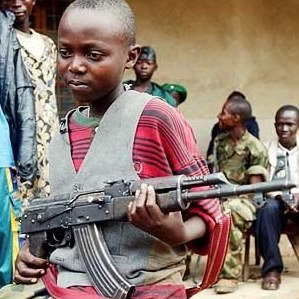
Over 30,000 children are involved with fighting forces in Democratic Republic of Congo. They work as soldiers, porters, cooks, spies and 'wives'.

Although I did love the gorillas story, I stiell believe the war children need coverage and HELP. Probably a story on Anderson Cooper 360 will bring some light and hopefully attention to them.


And please take a look at our video sidebar for another piece of the Children Soldiers.

Find more about them HERE

Bleak future for Congo's child soldiers
By Karen Allen
BBC News, Masisi, Democratic Republic of Congo

He looks not much older than 10.

But the boy in the baggy green uniform, eyeing us up suspiciously as we move through the village, represents one of the Democratic Republic of Congo's ugliest of legacies - the use of child soldiers.

Estimates put the number at 30,000.

Easy to train and even easier to hide, these children are too young to vote but old enough to carry a gun.

With historic elections just around the corner, these boys and girls - a third of those recruited are young girls - represent the enormous challenge that lies ahead, to stabilise a region that's long been rebel territory.


Soldiers' wives

Many militia groups have nothing to gain from these elections and uncertainty about the future is making it harder to persuade them to surrender the young back to the community.

Only last month a minibus was ambushed as it tried to take demobilised youngsters home; some of the victims of that incident are now in hiding.


They asked me if I was ready to sign, so what could I do - I didn't want to die.
Ndungutsa, former child soldier

In Masisi, in eastern DR Congo's north Kivu region, a range of militia, including remnants of Rwanda's Hutu patrol the hills around here and despite the presence of UN peacekeepers, the recruitment of children into armed groups continues with impunity.

Most of the children who have swollen the ranks of the militia and the fragmented Congolese army have been abducted from their villages.

Ndungutsa was taken when he was just 13 years old, forced to make a choice between the militia or death.

"When they came to my village, they asked my older brother whether he was ready to join the militia.

"He was just 17 and he said no; they shot him in the head.

"Then they asked me if I was ready to sign, so what could I do - I didn't want to die".

The youngsters are either taken on as fighters, porters or guards.


For the girls, many end up as "soldiers' wives" or sex slaves, some as young as 10.

Try to speak to them and they respond in monosyllabic hushed tones.

These are youngsters who had their childhood innocence knocked out of them.

Quite literally.

A third of DR Congo's child soldiers will never be reintegrated back into their communities.

In some cases because of the shame, others simply because their families can't afford to take them on, but there are also the ever-present threats and intimidation.

Fresh hope

I accompanied 12 year-old Innocent as he made his way back home.

He was a fighter battling against the Mai Mai militia.

In his village, his mother and siblings embrace him but on the fringes of the celebrations the same militia that abducted him are looking on.

In a part of DR Congo where virtually all Innocent's fellow children are severely malnourished and in tattered clothing, a life with the rebels offers food, power and some status.

A sad reality is that all too often children like Innocent return.


So do elections bring fresh hope?

"Not at all" says Simon Muchanga from a Catholic mission in Masisi which seeks to rehabilitate child soldiers.

"The rebel groups are unlikely to alter their position because of the election.

"Maybe if a real, responsible government is elected with the capacity to bring about change and improve the prospects of these people, maybe then we can see some real progress".

It's an issue that has been largely ignored - recruiting juveniles is a breach of international law.

The world's biggest peacekeeping force has made some inroads into trying to disarm the rebels.

The vast scale of the country and years of insecurity makes it a painfully slow task.

With elections just days away, there is little incentive for the militia to hand over their children, not least because most armed groups will see their power eroded.

Tuesday, October 03, 2006

The Women of the Congo And why they need our help


The Women of the Congo And why they need our help

Everyday women of the Congo are brutally gang raped, tortured, and taken into sexual slavery. Often they are left to carry their assailant's child and/or STD. Their husbands typically abandon them for fear of catching an STD or because they are overwhelmed with shame.

According to Women for Women International (an aid organization in the region) this is happening because of "a complex web of local, regional, and national conflict has devastated much of eastern Democratic Republic of the Congo (DRC; formerly Zaire) for the past several years. Ethnic strife and civil war began in 1997, but had been brewing since 1994, sparked by a massive inflow of refugees from the fighting in Rwanda and Burundi. Rebel groups from neighboring countries entered the conflict in 1998.

The country's most recent conflict, which has been called "Africa's First World War," has roots in a struggle for power and resources, both among domestic and foreign interests. Mortality surveys estimates that 3.3 million people have died as a result of this war since 1998. The majority of these deaths were due to preventable causes such as infectious disease and malnutrition. Involving seven African nations and many groups of armed combatants, this is the deadliest war in documented African history, with the highest civilian death toll in a war since World War II. The war has been marked by gross human rights violations, with a particular toll upon women who face epidemic levels of sexual violence. An estimated four-fifths of rural families have fled their homes at least once during the conflict, and more than 2 million people are currently displaced within the DRC's borders. Despite the country's enormous mineral wealth, several years of war, on the heels of thirty-two years of corrupt, dictatorial rule under Mobutu Sese Seko, (1965-1997), has shattered the country's infrastructure, economy, and ability to provide basic services such as health and education.

A fragile transitional government of national unity has been in operation since June 2003, with the hopes of holding general elections in 2005. This fragile peace agreement was undermined by renewed clashes between government and militia troops in late May and early June of 2004, resulting in a number of civilian deaths, rapes, and the departure of thousands of refugees for Rwanda and Burundi."

PLEASE JUST DON'T SIT THERE WATCHING ANDERSON COOPER, DO SOMETHING!

src="http://action.one.org/media/banners/ONE_banners_011_180x150.gif"
width="180" height="150" border="0">

More information about the violence in Congo. For more info Watch Anderson Cooper 360


Media Fanning Election Violence

The East African (Nairobi) ANALYSIS

September 26, 2006 Posted to the web September 26, 2006 Nairobi


AS CONGO WAITS FOR the final leg of its presidential elections, new lessons have been learnt about how a partisan press can be detrimental to peaceful electioneering.
Indeed, the Congo elections have given new insight into what happens in an environment where most of the media outlets are owned by players in the same elections.
The Congolese press has been a major contributing factor to the tense security situation in the country, particularly Kinshasa.
Despite various agreements the candidates signed before the campaigns to ensure peaceful elections, many of the media resorted to personal attacks against other candidates and at times resorted to ethnically-slanted hate commentary.
Observers now say that if no intervention is made to introduce new standards to contain crass partisanship in the media - especially the electronic media - violence might erupt after the final results are announced in November 2006.
There are a 119 radio stations, 52 television stations, and 176 newspapers and magazines in the country, most of them operating in Kinshasa and owned by the major politicians or their close associates.
President Joseph Kabila has strong influence over Digitalcongo, Radio Television Groupe l'Avenir and the national television company, while Vice-President and presidential hopeful Jean-Pierre Bemba owns Canal Kin TV, Canal Congo TV and Radio Liberte.
Most of the news is, therefore, presented with a strong bias in favour of a political party or a candidate. The presidential elections held in June attracted a total of 32 candidates.
Even the national radio and TV station, which has the widest reach, is subject to influence mainly because under the terms of the transitional government, its management was divided among the various political factions.
For example, the station's director was named by Kabila and the station's political bias was evident during the first round of elections.
The media have been used extensively to rally support often with ethnically-tinged invective or insults.
For example, Bemba's official campaign slogan is 100% Congolese, and he often brands Kabila as a Tanzanian or Rwandese national, depending on what is expedient.
Under the peace deal that ushered in the transition, a media watchdog was set up to ensure the press does not resort to hate commentary and promote conflict.
The watchdog is supposed to implement the various press laws, including the 1996 Press Law and a code of conduct for media during the elections.
But during the six months before the first round of elections, the media watchdog sanctioned several media companies many times, suspending them for short periods for inappropriate programming and hate speech.
It also called repeatedly for broadcast media to provide equal time to presidential candidates and for the state-run media to eschew bias in its programming.
Despite the sanctions against various media, however, the media watchdog was often unable to prevent politicians from manipulating the press.
The watchdog does not have the power to shut down broadcasting signals and has to rely on the good faith of the media to voluntarily shut down their operations for the designated period.
Where the media refuses to obey, the watchdog has to resort to drawn-out judicial proceedings that bear fruit long after the infraction took place.
WHILE THE MEDIA have played an essential role in the electioneering process - providing information to the public and allowing candidates to engage in constructive debate about their political platforms - it has also shown that it can instigate unrest if not used properly.
In late August, 40 broadcast and print media in Kinshasa signed an agreement to abstain from defamation and hate speech during the second round of the elections.
Whether this will work this time around remains to be seen because they had signed a similar agreement during the first round of elections.
Congo faces a crucial time in its history. If the final part of the elections ends peacefully, it will have far-reaching implications for democracy and peace in the region.
But for now, the situation remains dicey.
On August 20, several hours before the electoral commission was due to announce the results of the presidential elections, fighting broke out around Bemba's Canal Kina TV station in Kinshasa.
The station had been broadcasting programmes critical of President Kabila, at times attacking him personally and accusing him of having rigged the elections.
Canal Congo Television (CCTV), another station belonging to Bemba, announced that there would be a run-off between Bemba and Kabila even before the official results had come out.
As it turned out, these broadcasts prompted units of the integrated police Ð which is close to Kabila - to deploy around the two TV stations, which were protected by about a dozen of Bemba's soldiers.
Around six o'clock in the evening, an altercation between the police units and Bemba's guard degenerated into a shootout that left two dead.
Shortly afterwards, the Office of the Presidency ordered a reinforcement of the police units by the presidential guard, who arrived on the scene heavily armed.
Bemba reacted by deploying more troops to protect his stations.
Heavy fighting then ensued, leaving at least another four dead, but the presidential guard was unable to enter or significantly damage the offices of the television stations.
After the fighting had calmed down, some of Bemba's troops reportedly attacked some traffic policemen and beat them up without any provocation.
Troops from the UN Mission in Congo (Monuc) had to be deployed to secure the nearby Electoral Commission offices and escort its president, Abbee Malu-Malu, to the national television station to announce the results.
Soon afterwards, and after diplomatic pressure on Bemba and Kabila, both sides backed down and the fighting ended.
Kabila, whose close advisers had been sure of a first-round victory, fell short of an absolute majority - with around 45 per cent of the vote - while Bemba won 20 per cent. Malu-Malu announced that there would be a run-off election between the two on October 29.
The battle over the airwaves then intensified. The following day, Bemba and Kabila's respective media continued to trade blame about the events of the day before, with each accusing the other of initiating the fighting.
In the afternoon, Kabila gave instructions to his security service to shut down the broadcasting signal of Bemba's two TV stations in Kinshasa's suburbs. Shortly thereafter, troops from the presidential guard moved to attack Bemba's two residences as well as his office.
According to eyewitnesses, several hundred troops deployed, along with tanks, mortars and rocket-propelled grenades.
Their attack coincided with a visit to Bemba by 14 ambassadors along with the head of Monuc. The diplomats were stuck in Bemba's residence for over six hours. Soon after the fighting began on Monday, the European Union Force (Eufor) and Monuc troops deployed in town and escorted the diplomats out of Bemba's beleaguered residence.
The presidential guard destroyed Bemba's personal helicopter, with the fighting lasting into the night and sporadic shooting continuing until noon the following day.
According to the official tally, 23 civilians and soldiers were killed and 43 wounded.
Various international figures, including South African President Thabo Mbeki and UN Secretary-General Kofi Annan, intervened by calling Kabila and Bemba on August 21, urging them to end the fighting.
Two days later, delegates from both sides met at Monuc headquarters in Kinshasa to discuss the way forward. They decided on garrisoning the troops that had been deployed during the fighting and set up two joint commissions - one to investigate the events of the past few days and the second to decide on how to proceed with the second round of presidential elections.
In addition, joint patrols with officers from both sides were set up by Monuc and Eufor to investigate allegations of troop deployment and rearming.
During the week following the fighting, most of the additional troops that Kabila and Bemba had called on as reinforcements had returned to the barracks along with the tanks and heavy weaponry.
The situation, therefore, returned to the status quo before the violence.
In September, Mbeki and EU Foreign Minister Javier Solana visited Kinshasa. These visits, along with pressure by other leaders, led to a meeting between Kabila and Bemba under the auspices of the Defence Council on 13 September.
However, despite promises made by both candidates to abstain from violence during the second round of elections, no mechanism has been put in place to prevent the troops redeploying from the barracks during another escalation.
What caused the fighting? Opinion is still divided but the manner in which troops have been deployed is clearly a major factor.
Indeed, one of the major reasons for the rapid escalation of violence in Kinshasa are the security arrangements in town.
In retrospect, the peace deal signed by the parties in South Africa did not conclusively solve the problem of how the security of the capital city would be maintained and managed during the transition.
Under the arrangement, the vice-presidents - including the main rebel leaders Azarias Ruberwa of the Congolese Rally for Democracy (RCD) and Jean-Pierre Bemba of the Movement for the Liberation of the Congo (MLC) - were allowed up to 35 bodyguards .
But the agreement did not place a limit on the size of the presidential guard. It was only later that the transitional parliament in 2004 passed a law limiting the guard to 4,500 troops.
Thus, Kabila was allowed to command over a hundred times the number of troops that his former enemies on the battlefield had.
According to the agreement, Monuc was supposed to act as a stabilising force in the capital, assuring the safety of all leaders of the former warring factions.
As soon as the international community had trained a professional and neutral police force, they were supposed to take over the protection of the vice-presidents and all other state institutions.
As it turned out, none of these promises were kept, giving Kabila a military advantage.
According to most estimates, Kabila's presidential guard still numbers around 14,000 throughout the country - which is why the vice-presidents and leaders of the former rebel groups have been reluctant to scale down the sizes of their own bodyguards.
Bemba has around 2,000 troops at his two residences and office, while Ruberwa has around 1,500.
Under the South Africa peace deal, these personal protection forces and militias were supposed to be sent to army integration camps.
BUT THEIR LEADERS HAVE said that they will wait until after the elections to disband them.
Only around 800 soldiers from the various personal bodyguards have been sent to the Kibomango integration camp in Kinshasa.
A quick look at the geography of downtown Kinshasa shows how volatile the situation is.
Bemba's residences are within a kilometre of both Kabila's residence as well as his office. Presidential guards are deployed within 500 metres of Bemba's troops.
In the build-up to the elections, the international community accelerated the training of the police in Kinshasa in the hope that they would take over the job of protecting leaders such as Bemba and Ruberwa.
French, South African, Angolan and European Union officers trained Congolese police for this purpose.
But the plans did not work out, mainly because the vice presidents did did not trust the police to protect them.
In fact, the police units were simply added on to the bodyguards of Bemba and Ruberwa.
The events of August 20, when an integrated police patrol appears to have been dispatched to confront Bemba's guard at his TV station, confirmed that some police units are still beholden to political interests.
According to international security experts, the integrated police trained by Angola - whose government was an ally of Kabila during the civil war - may be aligned to the president.
During the unrest of June 30, 2005, members of the Angolan-trained units were guilty of killing several members of the Union for Democracy and Social Progress, which opposed the postponement of elections.
A further problem has been the procurement of weapons and ammunition for the national army.
According to the current arrangement, the Congolese government cannot procure arms without notifying Monuc in line with an arms embargo on the country, that has been in force for the past two years.
Only demobilised and integrated brigades can receive these supplies. There are currently 12 integrated brigades in the country, while an estimated 30,000 soldiers are still in the same formations they were in during the war.
Last August, a delivery of 21 tanks and several tonnes of ammunition arrived at the port of Matadi.
Although Monuc later confirmed that it had been notified, other sources say the Congolese government had not followed the right procurement procedures.
At the end of August, some of the material was brought to Kinshasa, ostensibly to equip one of the two integrated brigades based there.
However, Monuc has not been able to confirm the destination of this equipment, and there have been reports of the presidential guard benefiting from these supplies.
The skirmishes which erupted after the elections also served to demonstrate the weaknesses of Eufor and Monuc forces in the country.
Although there are both Monuc and Eufor troops deployed in Kinshasa, neither was able to stop the escalation of violence.
After the fighting at the television station on August 20, international troops should have moved to deter further fighting, in particular by creating a buffer between Bemba's and Kabila's forces.
Monuc troops in Kinshasa comprised South African, Uruguayan and Tunisian battalions.
These troops are committed to protecting UN installations and personnel, according to the memorandum of understanding their countries signed with the UN. They are, therefore, and unlike the Monuc forces deployed in the east of the country, not equipped to engage in combat situations.
This was one of the reasons the UN sought EU troops during the election period.
Eufor deployed troops in Kinshasa in the run-up to the elections to boost Monuc's capacity to deal with violence in the west of the country.
Before the violence broke out, they had 1,200 troops in the capital, with a reserve of 1,200 based in Gabon and another group based in Germany.
However, of the troops in Kinshasa, there are only two companies of combat troops of around 130 soldiers each - a Spanish special forces unit and Polish military police. The latter protect EU installations. This means there are only 130 Spanish troops available for forcible intervention in case of violence.
When fighting broke out in Kinshasa, Eufor called on reinforcements from Gabon. A task force of around 220 soldiers arrived after most of the fighting had already ceased, to help with patrolling. The bulk of the combat troops were left in Gabon.
International forces in the Congo have had a hard time intervening once fighting has broken out because such intervention requires the use of force against one or the other sides, a step the UN is often hesitant to take given the possible political repercussions.
THE MOST EFFICIENT USE OF peacekeeping troops has proved to be as a deterrent, deploying troops in such a way as to prevent an escalation.
Although it was difficult to predict the large-scale attack on Bemba's installations on August 21, the events of the previous day should have led to a more robust UN deployment in the area around the presidential and vice-presidential residences.
Still, the motives of the attacks on Bemba's house remain unclear.
While slander in the media and a tense security situation provided the backdrop to the fighting, Congolese leaders are responsible for the escalation of violence after the elections.
In particular, Kabila's order to launch a large-scale attack against Bemba was entirely disproportionate to the threat his rival posed.
It is difficult to establish who initiated the fighting at the TV station on August 20. Nonetheless, at that point talks between the two sides could have calmed tensions.
As it turned out, Kabila's order to attack Bemba's various compounds in town led to a dramatic escalation of the violence and pushed the electoral process to the brink of collapse.
As results from the west came in, Kabila slipped in the polls, and the returns from Kinshasa - where he got only a small percentage of the vote - pushed the incumbent below the 50 per cent he needed for an outright win.
"This made it seem like Bemba's smear campaign was responsible for Kabila's poor showing in the west, said one diplomat.
When the attack was launched on Bemba's residence, Kabila claimed he was not aware of the offensive.
But he later stated that he had ordered the presidential guard to launch an operation to free their captured colleagues.
Although some diplomats in Kinshasa believe Kabila does not entirely control his guard, military experts and advisers to the president alike said it is impossible that such an important operation could have been launched without his approval.
The biggest challenge facing Congo now is how to secure the second round of the presidential election.
Observers in the country have made several suggestions on the shape of a possible political agreement between Bemba and Kabila on the deployment of forces:
(a) The number of bodyguards deployed in their immediate vicinity must be kept to a proportional minimum, with troops that do not belong to personal bodyguards, including troops of the national army, being confined to military barracks until the announcement of the elections results;
(b) The locations where troops and weapons belonging to Kabila and Bemba, including heavy weapons and ammunition stockpiles, are located, must be clearly designated;
(c) Eufor and Monuc must be given unconditional access to all military facilities, including those of the presidential guard;
(d) The protagonists must abstain from personal attacks in the media during the second round of elections, with sanctions such as a ban from appearing in the press for individuals who break this agreement;
(e) Eufor troops in Kinshasa should be reinforced with troops from Gabon in order to have at least 1,000 combat troops in the city;
(f) Eufor and Monuc troops must be allowed to use force to create buffer zones in Kinshasa between the two sides;
(g) Eufor's mandate should be extended to cover the entire election cycle, including the formation of a new government, effectively to the end of January 2007;
(h) The media watchdog must be ampowered be able to take swift action against media who violate the code of conduct. In particular, Kinshasa courts should give the watchdog preferential treatment and grant swift injunctions to suspend media when provided with proof of indiscretion by the watchdog; and,
(i) There must be a guarantee of equal access to presidential candidates on state-run media.
Copyright © 2006 The East African. All rights reserved. Distributed by AllAfrica Global Media (allAfrica.com).

ONE by ONE, We Can Make a Difference

Photobucket - Video and Image Hosting
U2's Bono kicking off a ONE rally in Philadelphia

With the focus on Africa this week, I thought I'd mention a group that has done a lot to raise awareness of the issues that plague Africa. Ladies and gentlemen, may I introduce the ONE campaign...

What is ONE?

ONE is a new effort by Americans to rally Americans – ONE by ONE – to fight the emergency of global AIDS and extreme poverty. ONE is students and ministers, punk rockers and NASCAR moms, Americans of all beliefs and every walk of life, united as ONE to help make poverty history. ONE believes that allocating an additional ONE percent of the U.S. budget toward providing basic needs like health, education, clean water and food would transform the futures and hopes of an entire generation in the world's poorest countries. ONE also calls for debt cancellation, trade reform and anti–corruption measures in a comprehensive package to help Africa and the poorest nations beat AIDS and extreme poverty.


What does ONE aim to do/change?

ONE aims to help Americans raise their voice as ONE against the emergency of AIDS and extreme poverty, so that decision makers will do more to save millions of lives in the poorest countries.


Who supports ONE?

ONE is a broad movement of Americans from every state and walk of life–more than 2 million people have lent their voices to ONE by visiting ONE.ORG and signing the ONE Declaration. More than three million Americans are also wearing white bands as a show of support for ending extreme poverty and global AIDS. ONE is Americans spreading the word in churches, coffee shops, on television, college campuses and the Internet.


Who is behind ONE?

ONE is a coalition of 2 million people and over 70 non-profit, advocacy and humanitarian organizations. ONE was founded by 11 of America's most well-known and respected aid groups: Bread for the World, CARE, DATA, International Medical Corps, International Rescue Committee, Mercy Corps, Oxfam America, Plan USA, Save the Children US, World Concern, and World Vision. For the complete list of all coalition partners, please visit our partners page.


ONE is supported by Americans from every state, different ages, many religions and all walks of life, including such notable people as: Brad Pitt, Tom Hanks, Pat Robertson, Kate Hudson, Rick Warren, Jamie Foxx, Jars of Clay, Penelope Cruz, Dave Matthews, Salma Hayek, George Clooney, Bill Gates and many, many others.

For more info, go here

(outside of the US, visit the Make Poverty History website)

Another group dedicated to helping Africa is DATA. DATA stands for Debt, AIDS, and Trade for Africa.

"The organization was founded in 2002 by Bono, the lead singer of U2, along with Bobby Shriver and activists from the Jubilee 2000 Drop the Debt campaign. At the core of DATA's mission is a view that these issues are not about charity, but about equality and justice."-- the DATA website

Don't forget to watch 360 this week!

In Congo it won't be business as usual for Anderson Cooper and the CNN Crew


The fragile state of press freedom in the Democratic Republic of Congo was shattered when the eastern city of Bukavu fell briefly to Rwandan-backed rebels in early June. State-imposed restrictions and imprisonment, as well as rebel-backed threats and attacks, limited independent reporting. With the flow of information constricted, rumors flourished and apprehension spread throughout this central African nation of 53 million.

In a two-month period surrounding the unrest, the government issued at least three directives restricting coverage, authorities imprisoned at least four journalists, and attackers allegedly led by an army officer severely beat another journalist, an investigation by the Committee to Protect Journalists has found.During that same time, CPJ found, rebels forced Bukavu's three main community radio stations to close and threatened at least four journalists, forcing them to flee. Rebels were also blamed for killing the brother of radio station director Joseph Nkinzo, whom they mistakenly believed was the journalist.A CPJ delegation traveled to the DRC in June, confirmed the deteriorating conditions for journalists, and met with government officials and press leaders. The new attacks against the press, CPJ found, reflect ongoing and fundamental obstacles to press freedom in the DRC. They are:


  • The government continues to issue edicts to restrict and censor press coverage.
    Continuing violence and insecurity, especially in eastern parts of the country, threaten the safety of journalists.

  • Abusive and outdated laws—the legacy of the late dictator Mobutu Sese Seko—are still used to imprison and silence journalists who dare offend government officials.

  • The profession is chronically beset by economic problems and a lack of training.
Government tightens gripJust weeks before the unrest, optimism had marked World Press Freedom Day (May 3) in the DRC, where journalists had been frequent targets for violence, harassment, and imprisonment during two civil wars in 1996-97 and 1998-2003. Media groups noted that no DRC journalist was in prison and that reporters were working more freely and safely. Press conditions had gradually improved, they said, since the Kinshasa government of President Joseph Kabila and the main rebel groups signed an agreement in December 2002 to end years of civil war.Their optimism soon evaporated. Two groups of Rwandan-backed rebels in the east, led by dissident army commanders Col. Jules Mutebusi and Gen. Laurent Nkunda, joined forces to take control of Bukavu on June 2 and hold the city for a week. The rebellion prompted violent demonstrations in Kinshasa and elsewhere against the United Nations, which had been unable to prevent Bukavu's fall, and political parties participating in the transition. And on June 11, the government had to turn back an attempted coup by Maj. Eric Lenge, a member of the presidential guard. Lack of official information about the coup and Lenge's whereabouts helped fuel more rumors and speculation.
With fighting around Bukavu in the east and political tensions running high elsewhere, the government sought to restrict the press and warned of sanctions against those who did not follow the government line. A May 27 communiqué signed by Vital Kamerhe, the press and information minister at that time, said that all TV and radio stations were "strictly forbidden to broadcast messages likely to aggravate the situation."On June 5, Kamerhe summoned editors of media outlets in Kinshasa and issued further warnings. According to CPJ sources, Kamerhe told them the country was on a war footing, that there should be no speech or images to discourage the population or the army, and that editorial lines should be patriotic. This was followed by a June 12 circular in which he cautioned the media against "words that might demoralize the Congolese Armed Forces" or "treating lightly the unfortunate events that threaten the peace process." He again warned of sanctions.Saying the minister's note contained "barely veiled threats," the local press freedom group Journaliste en Danger (JED) denounced "repeated attempts to muzzle the press or dictate the editorial line of press outlets." JED said that since no state of emergency had been declared, the minister had no right to issue circulars that contravened articles 27, 28 and 29 of the transition constitution, which guarantee freedom of expression and of the press.In a June 13 meeting, Kamerhe told CPJ that the directives were necessary because of the crisis and his belief that the press was capable of "inventing anything" to sell newspapers. As examples, Kamerhe said media reports had accused Vice President Azerias Ruberwa, head of the former rebel RCD party, of conspiring with Rwanda, and had accused the United Nations of plotting with rebel commander Mutebusi.
We are a young democracy to trust journalists 100 percent to censor themselves," Kamerhe said. Under the 2002 peace accord, Kabila will remain in power until 2005 with four vice presidents from both the armed and unarmed opposition. In 2005, the DRC is to hold its first democratic elections since independence in 1960. For now, dissent is not easily tolerated. On July 19, Lumbana Kapassa, director-general of private TV station RTKM, was summoned to the government security services office in Kinshasa and questioned for three hours. The focus of the interrogation: an RTKM broadcast showing Honoré Ngbanda Nzambo ko Atumba, former defense minister and special security adviser to Mobutu, addressing exiled officers of the dictator's former army. In his speech, shown in a recorded broadcast from Brussels, Ngbanda criticized the current regime in Kinshasa but urged the exiled soldiers to return to the DRC and join a new integrated army being created under the peace agreement, according to JED.Interrogators threatened Kapassa and confiscated tapes of the broadcast, JED reported. Kapassa was told that RTKM should never again broadcast anything featuring Ngbanda. Threats and assaults from rebelsThreats have come from rebels as well. Rebel forces that took Bukavu in June threatened and attacked three of the city's main radio stations—Radio Maria, Radio Maendeleo, and Radio Sauti ya Rehema—forcing them off the air until government forces retook the town a week later. Joseph Nkinzo, director of Radio Sauti ya Rehema (Voice of Mercy), narrowly escaped an assassination attempt when rebels came looking for him and murdered his younger brother Mukamba Mwanaume, whom they thought was the journalist.Ben Kabamba, director of Radio Maria; Kizito Mushizi, director of Radio Maendeleo; and Nkinzo had been receiving death threats by telephone since May 29. CPJ sources said the rebels began hunting for the three station directors shortly after taking the town. The rebels accused the stations of "genocidal ideology" against Congolese Tutsis known as Banyamulenge, but JED and other independent observers said they found no evidence of this. Nkinzo, Kabamba, and Mushizi took refuge in the U.N. compound in Bukavu and were then temporarily evacuated to Kinshasa, with the help of JED, CPJ, and others.

Although the rebels withdrew from Bukavu on June 9, there were continuing reports of clashes in eastern parts of the DRC and of rebel elements targeting journalists. Soldiers close to rebel army commander Laurent Nkunda began hunting for Déo Namujimbo, the Goma (North-Kivu Province, eastern DRC) correspondent for the France-based news agency Syfia, after an article he wrote denouncing a "reign of terror" by Nkunda's men appeared on Syfia's Web site on July 15. In his article, Namujimbo claimed that "for the last month and a half, the population of Minova, not far from Goma, has been living in terror because of harassment by soldiers of Nkunda encamped in the region. Racketeering and rape are frequent." His article was reprinted in newspapers in Kinshasa, including the July 17 edition of the daily Le Potentiel. Namujimbo's neighbors told JED that soldiers came looking for him on the night of July 17, asking when the journalist would return home. The next day, Namujimbo was forced to flee with his family to Bukavu and go into hiding. At least one attack is allegedly linked to a government soldier. On June 20, 2004, Modeste Shabani, director of the community radio station Sauti ya Mkaaji (Voice of the Farmer) in Kasongo, eastern DRC, was severely beaten and later hospitalized in intensive care, according to JED. An army officer from the former rebel movement RCD, Col. Bokeone Alumba Okoko, allegedly led the attackers, according to JED. Sauti ya Mkaaji had broadcast reports denouncing alleged human rights abuses by Bokeone in Kasongo. The armed men stormed Sauti ya Mkaaji's studio and threatened its staff before attacking Shabani. JED reported that Shabani suffered hip and rib fractures and acute pain at the base of his neck. The day of the attack, a commission of inquiry launched by Maniema Provincial Governor Koloso Sumahili suspended Bokeone from his army post. Human rights activists are calling for the colonel to be prosecuted.Outdated laws, new abusesDRC legislation, notably the 1996 Press Law and the Penal Code, criminalizes a wide array of "press offenses" and allows journalists to be prosecuted under vague and outdated statutes introduced under Mobutu. The charge most frequently invoked is defamation, which carries prison sentences of up to five years. The penal code defines defamation as attributing "maliciously and publicly" to a person "a precise fact which is of a nature to damage the honor or standing of that person or expose him to public humiliation." It does not specifically say the "precise fact" must be untrue.

In a recent report, the local press freedom group African Media Institute (AMI) wrote: "By sentencing [journalists] systematically on the basis of defamation charges, the courts are in fact asking the press to avoid any words that could damage the honor and reputation of the politicians." And JED President Donat M'baya Tshimanga told CPJ: "I think that wanting to protect people's reputation over and above the public's right to know, especially in the case of those in posts of public responsibility, is a violation of freedom of expression. I think it is a violation of the principles of transparency which should characterize the functioning of the state."Journalists in the DRC are often placed in so-called preventive detention—imprisonment without due process—as soon as charges are brought against them.When the CPJ delegation arrived in the DRC, three journalists had been imprisoned on defamation charges in Kinshasa. Another was imprisoned on spying and trespassing charges related to filming for a story. And a fifth journalist had been sentenced to six months' imprisonment, although he was free on appeal, for defaming a businessman. CPJ and JED visited the four jailed journalists in Kinshasa Prison on June 6. The prison was overcrowded, and inmates complained of bad food and unsanitary conditions.
Lucien-Claude Ngongo, deputy editor of the weekly newspaper Fair Play, was detained May 19 on defamation charges brought by wealthy expatriate businessman William Damseaux. Local journalists said he was questioned about articles denouncing Damseaux's actions in a court battle with Berge Nanikian, another expatriate businessmen. Ngongo was released on July 28, after paying bail, according to JED. His trial began on August 2.
Albert Kassa Khamy Mouya, former publication director of the weekly newspaper Le Lauréat, was imprisoned on May 27, after Damseaux's lawyer brought defamation charges in connection with a March article, according to JED. The article also related to the legal battle between Damseaux and Nanikian. Kassa, who is diabetic, appeared to be in fragile health at the time of CPJ's visit. CPJ and JED pressed for his release on health grounds. He was released on June 29, pending further proceedings, after being hospitalized a week earlier.
Rakys Bokela, editor of newspaper Le Collecteur, was imprisoned on May 21 on criminal defamation charges. The former president of the Congolese boxing federation, Aimé Luvumbu, filed the charges in connection with a February 18, 2004, article in Le Collecteur that accused him of malfeasance when he was head of the federation. Bokela was released on June 13, pending further proceedings.
Gustave Kalenga Kabanda, editor and director of the independent weekly La Flamme du Congo, was arrested on June 7 at his home in Kinshasa. He was jailed on charges of filming illegally at the Gemena residence of Jean-Pierre Bemba, one of DRC's four vice presidents, after Bemba accused him of spying and trespassing. Gemena, in Equateur Province, northern DRC, is a stronghold of Bemba's former rebel movement, the MLC. Kalenga had led a team of seven Congolese journalists who visited Gemena from May 29 to June 5. The journalists filmed plantations and property belonging to the Bemba family, including a luxurious new residence being built by the vice president. Kalenga was released from Kinshasa Prison on June 26 after paying bail.

  • Lucien-Claude Ngongo, deputy editor of the weekly newspaper Fair Play, was detained May 19 on defamation charges brought by wealthy expatriate businessman William Damseaux. Local journalists said he was questioned about articles denouncing Damseaux's actions in a court battle with Berge Nanikian, another expatriate businessmen. Ngongo was released on July 28, after paying bail, according to JED. His trial began on August 2.
  • Kassa Khamy Mouya, former publication director of the weekly newspaper Le Lauréat, was imprisoned on May 27, after Damseaux's lawyer brought defamation charges in connection with a March article, according to JED. The article also related to the legal battle between Damseaux and Nanikian. Kassa, who is diabetic, appeared to be in fragile health at the time of CPJ's visit. CPJ and JED pressed for his release on health grounds. He was released on June 29, pending further proceedings, after being hospitalized a week earlier.
  • Rakys Bokela, editor of newspaper Le Collecteur, was imprisoned on May 21 on criminal defamation charges. The former president of the Congolese boxing federation, Aimé Luvumbu, filed the charges in connection with a February 18, 2004, article in Le Collecteur that accused him of malfeasance when he was head of the federation. Bokela was released on June 13, pending further proceedings.
  • Gustave Kalenga Kabanda, editor and director of the independent weekly La Flamme du Congo, was arrested on June 7 at his home in Kinshasa. He was jailed on charges of filming illegally at the Gemena residence of Jean-Pierre Bemba, one of DRC's four vice presidents, after Bemba accused him of spying and trespassing. Gemena, in Equateur Province, northern DRC, is a stronghold of Bemba's former rebel movement, the MLC. Kalenga had led a team of seven Congolese journalists who visited Gemena from May 29 to June 5. The journalists filmed plantations and property belonging to the Bemba family, including a luxurious new residence being built by the vice president. Kalenga was released from Kinshasa Prison on June 26 after paying bail.

On June 19, Nicaise Kibel-Bel-Oka, publisher and editor of the private weekly Les Coulisses in the northeastern town of Beni, was convicted of defamation, sentenced to six months in prison, and ordered to pay US$5,000 in damages. Intelligence agents arrested him that same day. The charges stemmed from a December 2003 Les Coulisses article that accused local businessman Jacques Kiangu of failing to pay taxes on goods he imported from Uganda, according to JED. On July 10, Kibel-Bel-Oka was granted a provisional release on appeal.

Kamerhe, who was information minister at the time of CPJ's visit, told CPJ that the government's policy was "zero journalists in prison." Asked about the frequent jailing of journalists as soon as they are accused, he said it was an anomaly, and that the government would reform the 1996 Press Law. "You are right," Kamerhe told CPJ. "You shouldn't start immediately arresting and locking up journalists without a legal hearing, just because they have been accused." Yet changes in government leadership threaten such assurances. In July, Kamerhe became secretary-general of the presidential party PPRD and was replaced at the Information Ministry by Henri Mova Sakanyi, who was until then the deputy minister of foreign affairs. Journalists and independent groups are still assessing the new minister's positions.Low standards and payEarly this year, journalists in DRC launched a campaign for the removal of criminal sanctions for press offenses. Kamerhe told them that he supported this in principle but said he believed that it should be done in stages. "That should not be the starting point," he told CPJ, "because if you decriminalize completely in an environment where the culture of the journalist and his level of training are not the same as in the countries which have decriminalized, that might open the door to abuses."

Poverty, he said, was a factor. "People are always saying that we have huge natural resources, that we are a potentially rich country, but the reality is that people are living in poverty comparable to that of Somalia," Kamerhe said. "And somebody who lives like that, he might be using his pen just to get something to eat and will not hesitate to violate the rules of the profession."And though journalists believe that poverty is no excuse for keeping criminal sanctions for press offenses on the books, many who spoke with CPJ also expressed concerns about the quality of journalism in the DRC. They cited the weak economy, low salaries, and poor working conditions as threats to the independence of journalists and media outlets. According to Kabeya Pindi Pasi, president of the Congolese Press Union UNPC, most journalists do not have work contracts, and many lack training. Some of these problems were evident during the crisis in Bukavu. Anti-Rwanda and anti-U.N. articles were particularly prevalent following the fall of Bukavu. For example, the daily newspaper L'Avenir ran an unsubstantiated claim that the U.N. escorted Rwandan troops into Bukavu. This same article appeared at least twice on the paper's front page, on June 3 and 7. The June 7 edition also carried an article on inside pages reporting unsubstantiated claims that Rwandan women had infiltrated Kinshasa to seduce and poison Congolese men. A front-page headline in the June 3 edition of daily Le Palmarès claimed that Rwandan President Paul Kagame had sent 4,000 troops to help the rebels in Bukavu but gave no source for this information.

For some, the answer to these problems lies in professional regulatory groups, three of which have been created recently (see box above). JED Secretary-General Tshivis Tshivuadi said the need to raise standards has been readily acknowledged and is being addressed. Now, he said, it is time for the government to ensure that journalists can report freely and safely."All the conditions have been fulfilled for the government to take a political step," he said, "to give a signal to say that it wants to let the press work freely, instead of working always under the shadow of that fear, that pressure, of knowing you could go to prison at any moment." Julia Crawford is CPJ's Africa program coordinator.

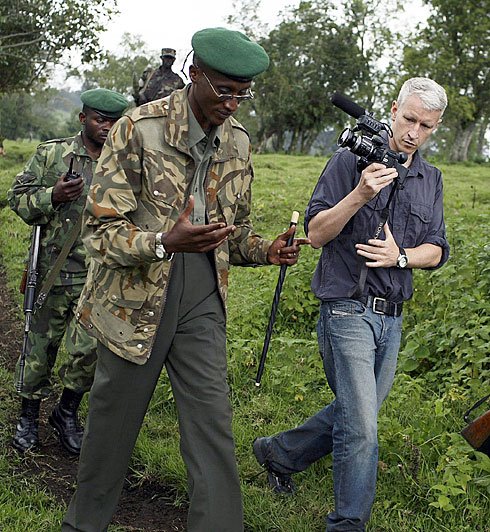
The relevance of Anderson Cooper 360 in Africa, the struggle for a free Congolese press.

"Rebellion" for Press Freedom
In the Democratic Republic of Congo, the press freedom group Journaliste en Danger defends and advocates.
by Julia Crawford
KINSHASA, Democratic Republic of Congo t's visiting time at Centre Pénitentiaire et de Réeducation, and long lines of women in colorful headscarves are waiting to bring food to relatives being held in this dirty, crowded prison.Charles Mushizi is there, too, as he is every week to visit jailed journalists. Mushizi is legal adviser to the Congolese press freedom group Journaliste en Danger (JED), and on this Sunday in June five journalists are in jail, including three new arrivals who have been put in "preventive" detention for allegedly defaming local dignitaries. One journalist, a diabetic, is sick from the poor diet and unsanitary conditions at the prison. Mushizi pushes his way through the crowded paths of the prison, and the journalists are brought, one by one, into a courtyard to meet him and two CPJ representatives. The journalists complain that there is no due process, that conditions are unsanitary. Before Mushizi leaves, he visits the prison director, who promises to move the sick journalist to better facilities. But it will take a stream of follow-up letters from JED before the journalist, Albert Kassa Khamy Mouya, is finally granted a provisional release. This is the kind of hard, persistent work that JED does every day in this central African nation where journalists still face violence, harassment, and imprisonment. Formed six years ago during the brutal regime of former President Laurent Kabila, JED provides legal and practical help to journalists in danger and presses for government reform."Setting up JED was a kind of rebellion against the systematic arrests, beatings, and censorship of the press," says Donat M'baya Tshimanga, JED's president since its inception. M'baya and JED Secretary- General Tshivis Tshivuadi, journalists by trade, have been in danger themselves for what they have reported. n May 1997, Tshivuadi was forced to flee Kinshasa and spend six months in hiding because of an article he wrote in Le Phare (The Lighthouse), the Kinshasa-based daily where he was deputy editor. The article accused former President Laurent Kabila, who had just seized power, of trying to create an ethnic army similar to that of the ousted dictator Mobutu Sese Seko. Le Phare's editor was arrested the next day, beaten, and tortured, while security agents came hunting for Tshivuadi. When he went into hiding, he says, his family was left without resources, not knowing where he was."It made me realize we needed an organization to defend journalists and to protect them," says Tshivuadi. So M'baya and Tshivuadi began working from a small, unmarked office with just a secretary, writing stories by hand to publicize and protest attacks on the press. JED gained international stature in October 1999, when it became a member of the Canada-based International Freedom of Expression Exchange (IFEX), which transmits JED's alerts around the world. IFEX Outreach Coordinator Kristina Stockwood calls JED "indispensable.""Since they have been on the ground, we have an incredibly reliable and credible source of information covering cases we otherwise wouldn't hear about," Stockwood says. "Seeing information going out of the country and coming back on the international newswires has also had a good impact on the DRC authorities."The uncertainty and danger of JED's work was highlighted in January 2001, when its leaders were forced underground after Laurent Kabila's government accused them of working for Rwandan-backed rebels. The charge was as good as a death sentence in a country at war with its eastern neighbors; security agents came hunting for them. It was only after Kabila was assassinated later that month, and his son Joseph became president, that JED reopened.Now M'baya and Tshivuadi have a team of five people working for them, and the JED logo adorns the office entrance for all to see. Their friends include major international and African press freedom groups, something they believe helps protect them from arrest. Under Joseph Kabila, the DRC has signed on to a peace process leading to democratic elections in 2005; the country's transitional constitution guarantees press freedom, though officials do not always respect that guarantee.Attacks on the press remain frequent, as evidenced by the threats, assaults, and imprisonment of several journalists since Rwandan-backed rebels briefly took control of the eastern city of Bukavu in June.But now, says Tshivuadi, "no case of an attack on the press can go unnoticed. People will know as soon as a journalist is imprisoned, for example. And that pressure contributes enormously to getting them released." ED is also asserting itself now politically, leading a campaign to remove criminal penalties for press "offenses" and denouncing abuses of the judicial system. "The biggest danger to the democracy we are trying to build here in Congo is our judicial system," M'baya says. "If you have no money, you will never win in the courts. Journalists are weak; they have no money. And as soon as someone brings a charge against a journalist, the first thing is that the judge gets them arrested and sent to prison."If a journalist denounces a case of corruption, the courts don't even try to find out if the journalist is right. No, no, the journalist is wrong to denounce corruption, wrong to denounce human rights abuses, wrong to criticize those with political power, to talk about the security situation in the east of the country or contradict the official version put out by the government. Our judicial system is far from independent, and I think it's a big danger for this country."While JED believes that no journalist should be jailed for his or her work, it is concerned about the quality of journalism in the DRC. "Many of the cases we have seen of journalists arrested and imprisoned are because they don't always respect their code of ethics," says Tshivuadi. "There are many journalists who have not been to training schools to learn how to collect, process, and distribute information."M'baya and Tshivuadi are stepping up JED's training efforts, particularly in the run-up to next year's elections, the DRC's first democratic poll since independence in 1960. For example, a recent workshop with journalists and politicians covered the dangers of "hate media," a pervasive concern with anti-Rwanda and antiforeigner propaganda still rife in the Congolese press.While pushing for higher professional standards, JED is also focusing on governmental reform. Any recent gains in press freedom, M'baya says, must be seen in light of one stark fact: Not a single law has been passed to guarantee the public's right to know, or to protect journalists from criminal liability."We have seen all the authorities, we've asked them to draft a law that would show they want to change things and that they are different from the old regime," he says. "They say they came to chase away dictatorship, that they came to install a democratic regime. But they continue to rule using the laws of that dictatorship. And we think that is a contradiction."Julia Crawford, CPJ's Africa Program coordinator, led a two-week mission to the Democratic Republic of Congo in June 2004

Two Television Channels Destroyed By Fire in Kinshasa, JED Demands Immediate Investigation

Journaliste En Danger (Kinshasa)
PRESS RELEASE
September 20, 2006
Posted to the web September 20, 2006


Only a week after their broadcast programming had resumed, after being suspended by the illegal and unfair cutting of their signal for 21 days, both of the television channels, Canal Congo Television (CCTV) and Canal Kin Television (CKTV), were shut down again in the early evening hours of 18 September 2006, by a mysterious fire which broke out and caused extensive damage. CKTV is privately-owned by vice-president, Jean-Pierre Bemba Gombo, who is a candidate in the second runoff of the presidential election.

According to the testimonies gathered by JED at the scene of the blaze, journalists and technicians working for these channels were surprised by a sudden "explosion", which was followed soon afterwards by a huge flame. The fire spread quickly on the third floor of the building that hosts the channels' editorial offices and studios. The same witnesses attested that important equipment was damaged and that persons inside the building were injured. The general manager of CCTV, Mr. Stephane Kitutu Oleontwa, suffered serious burns and was admitted to the emergency department at a local Kinshasa hospital.

During the early afternoon hours of 19 September 2006, a troublesome situation reigned in front of the headquarters of these TV stations, where a crowd of supporters of the People's Movement for the Liberation of Congo (MLC), the political party of Mr. Jean-Pierre Bemba, and some onlookers were stoning police officers as they attempted to disperse the demonstrators. Questioned by JED, most of the demonstrators told the watchdog organization that, this fire, which set ablaze these television outlets just few days after the resumption of their broadcasts, was seen as "a barbaric act of sabotage".

JED is seriously concerned by this awful situation, which has, as an immediate consequence, an effect of silencing media outlets that are considered "troublesome". JED hereby recalls the substance of its last open letter addressed to the special representative of the UN Secretary General in DR Congo, Mr. William Lacy Swing. In that letter, JED voiced its fears vis-à-vis the situation of extremely high tension created and maintained around these television channels, which were accused of many wrongdoings, since the provisional results of the 30 July first round of presidential elections were announced.

At a minimum, JED has noted that the destruction of these TV stations can be added to a series of events, which have targeted the media since the beginning of the year. Apart from making a few mere statements expressing good intentions, the government has never carried out a thorough investigation to shed light on any of these cases.

To illustrate:

1. The "Radio Sankuru Liberté", privately-owned by Mr. Joseph Olengakoy and based in Lodja, a territory located in the Eastern Kasai Province, was set ablaze in January 2006, by unknown persons.

2. The headquarters of the Radio-Television Message of Life (Radiotelevision Message de Vie, RTMV) in Binza/Pigeon District, privately-owned by the Army of Victory church, was wrecked on 22 May at approx. 9:00 p.m. (local time) by a dozen heavily armed, plain-clothed men, who jumped down from three Prado trucks. They destroyed the TV transmitter and then carried away the video/audio mixer, a computer, a TV monitor, and mobile phones. They also seriously beat four technicians that they encountered at the RTMV outlets.

3. The site hosting the CCTV (Canal Compo Television) relay antenna in Kisanga, which is a small town located not far from Lubumbashi, capital city of Katanga province, was sabotaged on 29 March, by unidentified armed men. A maintenance technician from the permanent staff was found that night stabbed to death.

4. On the night of 15-16 April, in Butembo, (the second city of North Kivu province, located 350 km from Goma, in eastern DR Congo), unidentified armed men seriously damaged the transmitters of RTG@ (RadioTelevision Groupe l'Avenir), which is privately-owned by an MP who is a senior member of the presidential party), Digital Congo, which is privately-owned by President Kabila's family, and the RTNC, DR Congo's national public radio broadcasting and television corporation.

5. Tujenge Kabambare, the only community radio station based in Kabambare, which is a territory located about 450 km from Kindu, the capital city of Maniema province, was wrecked and its editor beaten, on 24 May, by military officers who acted on orders by a well-known commander in the vicinity. The commander even boasted of inflicting "such a punishment" against the media outlet, which was disturbing him.

6. With respect to these incidents and attacks against the media, which have gone not only unpunished, but also unexplained, JED demands that a thorough and joint investigation be carried out by the government and MONUC (The United Nations Mission in DR Congo). An investigation is urgently required to determine the causes and identify those responsible for this campaign of violence against the media, particularly in the lead-up to the second round of presidential election campaigning.

JED urges an end to all threats, intimidation and the systematic stigmatization of media and journalists, including those who have treated media professionals as scapegoats of politicians' failures and therefore as justifiable targets.

In accordance with the clauses on the exercise of freedom of expression in DR Congo contained in the 22 June1996 Law N0 96/002, JED urges that RTNC be reopened, in order to enable equitable access to this public media outlet, particularly during this election period.

Monday, October 02, 2006

Bush: Iraq War Critics "Wrong-headed"

WASHINGTON (AP) -- Gloves-off election-year rhetoric hit the radio Saturday, as President Bush argued that critics are wrongheaded to argue for a different policy in Iraq.

With just over five weeks to go before midterm elections in which GOP control of Congress could be at risk, Democrats have been citing a government intelligence assessment to bolster their criticism of Bush's approach to Iraq.

The classified National Intelligence Estimate, parts of which Bush declassified earlier this week, says the Iraq war has contributed to a global growth in the terrorist movement, but it also says success there could drain jihadists of momentum.

Bush argued Saturday that maintaining the U.S. presence in Iraq is crucial to winning the broader war on terror.

"Our safety depends on the outcome of the battle in Iraq," he said. "Withdrawing from Iraq before the enemy is defeated would embolden the terrorists."

The president has been fighting back against the Democratic attacks with a series of appearances, and he recycled many lines from earlier in the week in his Saturday radio address.

"Some in Washington have selectively quoted from this document to make the case that by fighting the terrorists in Iraq, we are making our people less secure here at home," Bush said. "Five years after the 9/11 attacks, some people in Washington still do not understand the nature of the enemy. The only way to protect our citizens at home is to go on the offense against the enemy across the world."

At a GOP fund-raiser Thursday in Alabama, Bush said, "The party of FDR and the party of Harry Truman has become the party of cut-and-run."

He also charged in Alabama that "some in Washington, some decent people, patriotic people, feel like we should not be on the offensive in this war on terror," without offering any evidence of such remarks.

White House press secretary Tony Snow acknowledged Friday that no Democrats have said directly that they do not want to take the offensive against terrorists, but he defended Bush's no-holds-barred politicking.

"I think there's been a lot of ratcheting up of rhetoric on the other side where the president has been accused of everything from dereliction of duty to not caring about what happens to people who have been claimed on the battlefields," Snow said. "The point the president is trying to make is, there are going to be some clear choices."

--from the AP
****

Wrong-headed? Or is it wrong to label those who disagree with you in such a manner?

Sunday, October 01, 2006

Before you email another marriage proposal to Anderson Cooper, do you really want to have a War Reporter as your Significant Other?

Melanie Anstey is married to a high profile foreign correspondent.She is a freelance documentary maker, and now works for the Rory Peck Trust in London.


Married to a War Reporter
Melanie Anstey


'If your husband is in constant danger, you end up living on red alert, and therefore you put your own needs last.'
My husband has reported on just about every single war. Since I met him 19 years ago he has been in Bosnia, Kosovo, Chechnya, Afghanistan, Gulf War One, Israel, and then in 1991 he went to Croatia where he was shot through the abdomen. He ended up being operated on by a bunch of very nice, chain-smoking, Serbian surgeons.
It was shocking, very distressing and very, very frightening. When I received the phone call, I did not know whether he was going to live. I dropped everything — ironically, I was producing a film about Medicins Sans Frontieres, in London — and his TV company flew me out with a replacement reporter and a close friend. They also flew out a surgeon from a specialist London hospital, more for my sake really.
The situation was so critical I went into adrenaline hyper-drive. I have always wondered how people cope in these situations, but to be honest, you have to. You go into this weird state of lucidity, and you do whatever you can to make sure that he gets proper treatment. When he was well enough to travel we brought him home to University College Hospital for a week, and after he came out he was on morphine for three months.
I gave up work to look after him, but it was far too serious to be pissed off about the situation. I was also lucky because I had fantastic employers who were very understanding. However, I did lose the job I was working on — it was my first producing opportunity. But the situation with him was so grave it did not occur to me respond in any other way.
We had major rows about him going back into foreign correspondent work. I understand it was important for him to re-establish his courage and his capacity for doing the work. He had dreamed of doing this job since he was a kid, so to give it up would be a major decision for him. Nor am I an ultimatum person — I have never pushed it that far.
Then in 1998 he got a near fatal illness in Baghdad. I had to go to Jordan, get him from there, and take him to a hospital in Israel. It was touch-and-go again, and we had to go through the whole recovery process once more. This time he even had to learn to walk again.
I realise now that I coped less well this time, because I had to fight every step of the way for him to get the right treatment, for his illness to be recognised and for him to be rescued in time. I was very tired and I had run out of resources, especially as I had other personal pressures to deal with.
Of course I have been traumatised by what has happened, but it is not a trauma that is commonly recognised. If your husband is in constant danger, you end up living on red alert, and therefore you put your own needs last. You forget to remember to look after yourself. You don't live a normal life; you don't think, 'What is my career path' or 'How am I getting on with everybody in the office' or 'When is my sister's birthday?'
Maybe I have always been bad at dealing with 'normal' things like that anyway, because you cannot blame events for your own personality traits. But there may be an element by which you have never been allowed to get bored. You are put into a kind of limbo state that revolves around what is happening to him. He's going away. He's coming back. He's injured. He's fine. He's tired.
During the Iraq war he went to Baghdad for three months and that was terrifying — to the extent that I had to stay indoors more or less continually for the three weeks watching those reports on television. I simply could not function any other way.
The pressure was so intense I would go out the door and start shouting at people — and I actually had one road rage incident. It was the day that the bombing was to start and I had taken the car to the garage. For once I would NOT give in to a white van man who was trying to barge his way past me. I had a furious row with him — and then I said to myself, 'Go home!' So I just stayed at home for three weeks. But in a way it became almost normal behaviour. I have a lot of Arab friends, and also a friend who has an Iraqi aunt in Baghdad — my friends couldn't go out either.
I am very afraid of him being killed — there is constant anxiety, the constant awareness of danger. But I can't think of it in the abstract when he is at home in London. He is such a home-loving, cosy person. You wouldn't imagine that somebody who does this work could be so relaxed and able to enjoy themselves.
I think experiencing trauma like this takes the relationship to a deeper level. Your bond becomes more intensely, mutually dependent. Whether that's a good or a bad thing I don't know. But even so, there are all sorts of pressures that are very difficult to deal with. One of them is absences, long absences, the coming in and out of each other's lives and trying to find common ground.
There's a big difference between being on a technicolour story and the coming home. It can feel drab in comparison. So you have to find strategies for reconnecting. Obviously it can make you feel second-rate because you cannot compete with wars and world events; you cannot compete with the importance of a war.
Also, you cannot say, 'Actually I need you home because I haven't seen you for a while', if you feel that lots of Kosovans, for example, are being persecuted and somebody needs to tell their story. It makes you subjugate your needs to your own detriment. So, being with someone who is high profile can be diminishing to the identity of the partner, and it can be difficult for you to represent your own needs strongly enough within the relationship.
I think anybody in a similar relationship faces the same difficulties. It is this huge sense of dislocation; of perhaps not sharing experiences in the way that a normal couple might, because you do not see each other as frequently, and because your experiences of life are very different.
I've been very dependent on friends to help me cope with what has happened, and how to deal with a relationship that presents such stresses and strains. I also started therapy about five years ago, partly because I was looking for a way to change professions. I found it interesting, but I think those who have been the most helpful are people who have lived through similar experiences. It's healing to talk to someone who truly understands, and to be able to tell the story time and time again. It helped me to put what happened into perspective.
I do believe that partners are co-conspirators, so I cannot say I have had a hard time because my husband's been a war correspondent for x-amount of years. What's made us stay together? A deep bond and common interest in the same sort of things, and lots of shared experiences. But above all, our friendship.
I think we have succeeded in being together for 19 years because I have a commitment to what he does. I have a commitment to the right news stories being told, and told well. Making social anthropological documentaries is my way of doing it because I don't like the pace of news, and sometimes I feel there is an over simplicity of news. I like the more ponderous, contemplative pace of documentaries. I like going right inside a community to present issues from the inside.
Although we've had a terrific relationship it hasn't allowed us to settle and to have children. I am sad about that. But, I knew I could not get neurotic about documentaries in Iraq when I'm supposed to be at home looking after kids.
Having said that, I am becoming increasingly aware that I need to change my priorities. I've run out of my capacity to cope with living separate lives. I have also run out of the energy that it takes to reincorporate him back into my life. I have decided the sacrifices were becoming too great to carry on as we are. So we are making changes to accommodate what we now both want from our relationship. I want to be more settled, and we have talked about this extensively.
On the other hand, I am very independent kind of person. I always have been like that and, as a result, aspects of this relationship have suited me very well. When I have had a documentary series to produce, I have been able to work obsessively. As a result, I deliver good results. And I know that if I had a husband who sulked every time I worked late it would have caused a lot of trouble, career-wise.

Recently Melanie and her husband have been approved for adoption in the UK, and are now planning to adopt a child from Russia.

So you like to to give your opinion even when not asked, love your freedom of Speech... how is your knowledge of The First Amendment?

We claim it almost constantly, wars are justified in order to provide it to others... but do you really understand the First Amendment?, do you use it wisely?


Questions
1. The Bill of Rights is:
a. The first ten amendments to the U.S. Constitution.
b. The statement police must read to you when you are arrested.
c. The opening paragraph of the Declaration of Independence.
d. The Preamble of the U.S. Constitution.

2. How does the First Amendment begin?
a. "Four score and seven years ago…."
b. "When, in the course of human events…."
c. "Freedom of speech and of the press shall not be abridged…."
d. "Congress shall make no law…."

3. The First Amendment protects students while at school.
a. True
b. False

4. Which of the following is not a right explicitly protected by the First
Amendment?

a. Press
b. Privacy
c. Assembly
d. Religion

5. The Constitution prohibits public school teachers from teaching about religion in school.
a. True
b. False

6. Which of the following categories of speech is never protected by the First Amendment?
a. Indecent speech on the Internet
b. Four-letter words
c. Obscenity
d. Nudity

7. The First Amendment protects a person's right to burn (including burning) the American flag as a form of political protest?
a. True
b. False

8. Bart is ticked off. To make time for more standardized testing, the public school he attends has decided to reduce recess to three minutes a day. To protest the school's decision, he publishes a one- page flyer that says "Recess Rules! Standardized Testing Drools." As he has seen many other community activists do before, he takes his flyers to the town square, where he peacefully offers copies to
passerby. Which of the following acts probably violates his First Amendment rights?
a. A police officer politely orders Bart to stop distribution and go home
b. A local merchant, an ardent support of standardized testing, angrily
rips the flyers out of Bart's hands and shreds them
c. Bart's mother, embarrassed by the all the hullabaloo, confiscates the
flyers and grounds him for two weeks
d. All of the above

9. At what age does the First Amendment officially begin to protect a person's free speech rights?
a. 18
b. 21
c. 16
d. None of the above

10. Which of the following are true statements?
a. The First Amendment prohibits government officials from
establishing an official religion
b. The First Amendment restricts government officials from interfering
with an individual's exercise of his or her religious beliefs
c. Both statements are true
d. Neither statement is true

11. Which of the following categories of speech is never protected by the First Amendment?
a. Expression intended and likely to incite imminent lawless action
b. "True Threats"
c. Clear and immediate threats to national security
d. All of the above

12. Can a reporter be sent to jail for refusing a judge's order to reveal the identity of his or her news source?
a. Yes
b. No

13. A local 14-year-old girl was recently found guilty of masterminding
a dog-knapping ring, which had shaken the community for months. Though the legal proceedings were closed to the public because she was charged as a minor, a trusted source has confirmed that the judge today sentenced the girl to four years in a juvenile detention center. You are the editor of the community newspaper who must decide how to cover the story. Which of the following options would the First Amendment protect?
a. Because the girl is a minor and the proceedings were closed to the
public, you choose not to publish the story.
b. You publish the story with accurate details of the crime and the girl's
sentence but, because she is a minor, you withhold her name.
c. You run the story with accurate details of the crime, her sentence,
her name and a photo of her entering court with her parents.
d. All of the above options are legal.

14. Which of the following categories of speech is never protected by the First Amendment?
a. Use of racial epithets
b. Ridiculing a person's ethnicity
c. Speech that demeans a person's gender
d. Speech that violates a person's legal right to privacy

15. The government can ban song lyrics that most people would find offensive.
a. True
b. False

16. Which of the following categories of speech is never protected by the First Amendment:
a. Copyright infringement
b. Ridiculing a person's sexual orientation
c. Indecent speech
d. Lying

17. The First Amendment limits the authority of school officials to stripsearch students.
a. True
b. False

18. While the First Amendment restricts their authority to actually censor the press, government officials are must be permitted to simply read or view highly controversial news stories before a commercial newspaper or TV station publishes or airs them for the general public.
a. True
b. False

19. The First Amendment prohibits private schools that accept government funding from censoring or punishing students who participate in lawful and peaceful on-campus speech activities.
a. True
b. False

20. Which student is most likely to prevail on his or her First Amendment claim?
a. Rebecca wants to challenge the school's dress code that prohibits students from wearing micro-mini-skirts in school.
b. Rob wants to challenge a school policy that prohibits students from wearing flip-flops to class.
c. Rachel wants to challenge a school policy that prohibits her from wearing an anti-war T-shirt to school.
d. Reggie wants to challenge a school policy that prohibits students from dying their hair bright, non-natural colors.

21. The church/state clause of the First Amendment prohibits students from praying in class before a test.
a. True
b. False

22. Students cannot be forced to pledge allegiance to the flag.
a. True
b. False

23. Betty is upset with her public school's proposed new dress code policy. She writes a column in which she explains why she opposes the policy. In the column, she criticizes the principal for using inaccurate statistics to support his position and urges her classmates to contact the school board to urge them to vote against
the policy. Which of the following would be protected by the First Amendment?
a. Using her home computer, Betty posts the column on her personal Web site.
b. Betty publishes the column on a flyer that she created at her mom's office. She offers the flyer to classmates as they enter school in the morning.
c. Betty includes the column as part of a press release that she sends to local media. Following an interview with a local TV station, her comments criticizing the school policy and the principal are seen throughout the community.
d. The First Amendment protects all of the above.

24. A public school can lawfully enact a campus speech code that prohibits "harassing, demeaning, highly offensive or insulting speech based on one's actual or perceived race, religion, color, national origin, gender, sexual orientation, disability or other personal characteristic."
a. True
b. False

25. A press pass gives reporters a First Amendment right to trespass on private property when covering the news.
a. True
b. False

26. Which of the following categories of speech is never protected by the First Amendment?
a. Hate speech
b. Defamation
c. Profanity
d. Harsh criticism of a person's religious beliefs

27. Where a public school fully funds its student newspaper, public high school principals have unlimited authority to dictate its
content.

a. True
b. False

28. The First Amendment does not protect which of the following religious Beliefs?
a. Islam
b. Satanism
c. Christianity
d. The First Amendment protects all of the above

29. A group advocating same-sex marriage has applied for a permit to march down Anytown's Main Street. The town's mayor — knowing the issue is highly controversial — has called for a special election in which the town's voters will decide whether the permit is granted. Which of the following statements is true?
a. The mayor's plan is illegal.
b. The mayor's plan is legal.
c. Whether the mayor's plan is legal or illegal depends on the outcome of the vote.
d. It depends in which state Anytown is located since the law can vary significantly.

30. Which of the following categories of speech is never protected by the First Amendment?
a. Deceptive or misleading advertising
b. Speech advocating that marijuana be legalized
c. Speech that mocks a person's political views
d. Erotic literature

RESULTS AFTER THE JUMP

"Test Your Knowledge of the First Amendment" was made possible by a generous grant
from the Newspaper Association of America Foundation (www.naa.org).

MANIFESTO

Don't think for me. Don't assume what I want to hear or read. Give me facts. Give me reasons. But not yours. Bring me debate. Enlighten me. Today, accountability is masked behind anonymity; bylines are hidden by zeros and ones. Everyone publishes; everyone is "in the know." Ethics are non-existent. Speculation is king. The truth is masked and a hostage. Empowered by our minds, WE ARE THE FREAKSPEAKERS!

FAIR USE NOTICE

This site contains copyrighted material, the use of which has not always been specifically authorized by the copyright owner. We are making such material available in our efforts to advance understanding of issues of environmental, political, news and humanitarian significance. We believe this constitutes a "fair use" of any such material as provided in section 107 of the US Copyright Law. In accordance with the title 17 U.S.C. Section 107, the material on this blog is distributed and available without profit to those who have expressed a prior interest in receiving the included information for research and educational purposes.

If your obsession against us and our content endures, you might find more information at: Law.

If you wish to use copyrighted material from this site for purposes of your own that go beyond "fair use", you must obtain permission from the blog owner.