Sunday, October 15, 2006

Why the Blue Shirts and other concerns

Minimizing Risks in Conflict Zones

Comportment
How journalists conduct themselves in the field may help save their lives, and the unwritten rules can vary from conflict to conflict. In some situations, for example, it may make sense for journalists to have a high profile, while in others, drawing attention to yourself may draw a hostile reaction from combatants. Talking with seasoned reporters who have covered the region is essential; veteran correspondents are usually generous with advice to newcomers.
Clothing and Culture
Journalists should be mindful of the kind and color of clothes they wear in war zones. Members of the media should always place prominent labels on their clothing (including helmets) that clearly identify them as press. Journalists who accompany armed combatants—irrespective of whether the combatants are uniformed— must consider how their own clothes may look from a distance. Bright and light colors that reflect a lot of sunlight may make a journalist too conspicuous. But wearing camouflage or military green could make journalists targets. Depending on the terrain, dark blue or dark brown may be preferable. In particular, some photojournalists prefer black because it doesn’t reflect light, but some combatants, especially rebel forces, often wear black. Of course, journalists should also respect local sensibilities. This includes men and women dressing as decorum may require. Foreign journalists of both sexes should also be aware of practices that could be offensive in some cultures.
Weapons
Journalists covering conflicts should never carry arms or travel with other journalists who carry weapons. Doing so jeopardizes a journalist’s status as a neutral observer and can make combatants view correspondents as legitimate military targets. In some particularly dangerous conflicts, journalists have hired armed guards. The practice first became widespread among television crews and reporters covering Somalia in the early 1990s after journalists traveling without armed guards were robbed at gunpoint. Journalists who use armed guards, however, should recognize that they may be jeopardizing their status as neutral observers. For example, CNN crews used armed guards in northern Iraq in 2003. On one occasion, unidentified attackers shot CNN’s vehicle, which was clearly marked with “Press,” and CNN’s hired guard returned fire. The gunmen continued to shoot the vehicle as it turned around and drove away. CNN International president, Chris Cramer, defended the network’s use of armed guards as necessary to protect CNN personnel in Iraq. Robert Menard, secretary- general of the Paris-based press freedom watchdog group Reporters sans Frontières, however, criticized CNN, saying that the practice “risks endangering all other reporters.” Many broadcasters now regularly employ experts from private security firms to accompany their news crews in the field, but these experts are not armed and primarily provide guidance on movements in conflict areas, including large street demonstrations.
Participatory Behavior
For their own protection, journalists should not engage in participatory behavior on the battlefield, such as identifying enemy locations, and they must be mindful at all times of their behavior, language, and attitude toward combatants. Whether they are embedded with military forces or traveling independently, the only role that journalists should play on the battlefield is that of observer. All journalists must remember that participatory behavior while traveling with combatants—or anywhere within a conflict area— an put them and their colleagues in danger.

Saturday, October 14, 2006

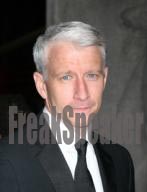
A FreakSpeaker.com Exclusive The Quills Awards

Being a journalist has its perks... like having friends that take photos and that are willing to share with you some unpublished or unsold materials for your website or blog.
Sorry for the mean watermark, but due to the nature of the Internet and the Andercommunity, we don't want them to go uncredited.

And To My Dear Freak, THANKYOU FOR THE ARCHIVE!

From The Quills Award


More during the week
Enjoy!

Friday, October 13, 2006

¡Bienvenid@s!

Hoy me percaté de que tenemos hermanos hispanos visitando este humilde "blog". Ha sido un esfuerzo titánico, particularmente por la dificultad del idioma. Pero en eso estamos y a eso vamos. Espero les agrade este espacio, y siéntanse en total libertad de dejarnos saber su opinión. Aquí el español es bienvenido. Si les interesa que exploremos algunos temas en específicos, no duden en sugerirlos, ya sea por medio de la sección de comentarios o por nuestros correos electrónicos.


También les invito a que visiten nuestra página web, www.freakspeaker.com y si la demanda es amplia será un verdadero placer abrir una sección en nuestra lengua.

Un abrazo desde una bella montaña hispanoamericana,

Christiane

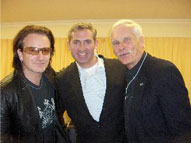
Bono and Oprah Shop in Chicago

Photobucket - Video and Image Hosting
Bono and Oprah hit the Magnificent Mile.

CHICAGO, Illinois (AP) -- Talk show host Oprah Winfrey and humanitarian rocker Bono hit the city's "Magnificent Mile" on Thursday for a shopping spree to promote a new line of clothing, accessories and gadgets, including a special-edition iPod, that will raise money to fight AIDS in Africa.

Dozens of "(Product) Red" items will go on sale in the coming weeks by Gap Inc., Apple Computer Inc., Motorola Inc., Converse Inc. and Emporio Armani.

Portions of the product sales will go to The Global Fund, an organization that fights AIDS, tuberculosis and malaria.

"Some people won't put on marching boots, so we've got to get to people where they are at, and they're in the shopping malls," Bono said in a phone interview. "Now you're buying jeans and T-shirts, and you're paying for 10 women in Africa to get medication for their children with HIV."

The Gap, which will debut its Red line in stores on Friday, will donate half the profits to The Global Fund.

Apple will contribute $10 from the sale of each new red-colored iPod nano. The model, priced the same as its $199 cousins, goes on sale Friday.

The celebrities, who arrived at the downtown Chicago Gap store in a red Ford Thunderbird, got a sneak peak at the products during a private shopping stint that will be broadcast Friday on Winfrey's show.

After visiting the Gap, the duo walked along Michigan Avenue to an Apple store and picked up the red iPod, the first music product from the Cupertino, California-based company designed to raise money for charity.

The two also stopped at Armani and Motorola stores.

"Shop 'till it stops," said Bono as he walked out of the Apple store clutching bulging shopping bags.

So far, the (Product) Red initiative, which began this spring in Britain, has raised more than $12 million for African AIDS programs, said Doug Piwinski, a spokesman for (Product) Red.

With Apple's iPod alone, The Global Fund stands to raise millions of dollars. During the holiday quarter in 2005, Apple sold 14 million iPods. The iPod maker also plans to donate some proceeds from a $25 iTunes Red gift card to the organization.

"I love the fact that Bono is trying to do something about this problem," Apple's CEO Steve Jobs said in a phone interview. "I've never been to Africa, but you don't have to go there to know there are a lot of people dying of AIDS there. In a small way, this is something we could do about it."

Bono, who knows the difficulties of raising awareness for social causes, was thrilled with the retailers' efforts for the campaign.

Gap had its four-story store in Chicago decked out in red banners. Apple planned to light up its flagship 5th Avenue store in New York in red on Thursday night.

"We've moved from the philanthropy budgets to the marketing budgets, and guess what, there's no comparison in size," Bono said. "We now have some of the most creative people in commerce -- Steve Jobs, the marketing people at Gap and Motorola -- all working for the world's poor. That is so so cool."
*****

And Bono will be on Larry King Live tonight, talking about his efforts to raise awareness in the fight against AIDS. Tune in to CNN at 9pm ET.

Visit the (RED) website for more information.

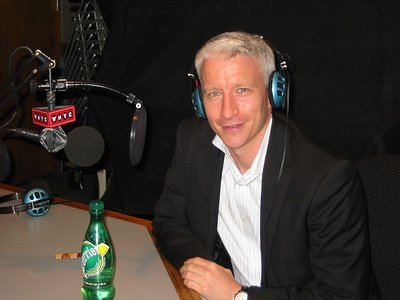
Anderson on the Tom Joyner radio program

Anderson Cooper did a phone interview Thursday morning with Tom Joyner on his radio broadcast. Cooper spoke about the situation in the Congo, as well as, Wednesday's plane crash in New York City. As usual, Cooper is much more articulate and stumbles less when the prompter and the camera are off.

Here is a little bit of background on Tom Joyner.

Tom Joyner was born in Tuskegee, Alabama and received a bachelor’s degree in sociology from the Tuskegee Institute. Upon graduating, Joyner took a job reading news on WRMA/Montgomery. Subsequent jobs at WLOK/Memphis, KWK/St. Louis and KKDA/Dallas followed.

Joyner’s success led him to Chicago, where he worked at stations WJPC, WVON and WBMX before hitting it big at WGCI.

Joyner made headlines in 1985 as “The Hardest Working Man in Radio,” when he accepted a morning position at KKDA/Dallas while simultaneously taking an afternoon show at WGCI/Chicago. His daily commute between the two cities led to high ratings in both markets while earning Joyner a new nickname: “The Fly Jock.”

In January of 1994, Joyner began syndicating The Tom Joyner Morning Show to 29 stations. Joyner’s new show offered a mix of music, comedy, guests—ranging from Stevie Wonder to Tipper Gore—and occasional discussions of social or political issues. Today, Joyner’s show is heard on over 110 stations.

Perhaps Joyner’s most unique honor comes from Impact magazine, who awarded their “Best DJ of the Year” award to Joyner so many times over the years that they finally renamed it “The Tom Joyner Award.”

Tom Joyner was inducted into the Radio Hall of Fame in 1998.

Hear Anderson HERE

CHANGING FACE OF NEWSGATHERING TECHNOLOGY By NIC ROBERTSON

Nick Robertson, one of the original Boys From Baghdad gives us his take about the evolution of newsgathering.


By NIC ROBERTSON
CNN’s Nic Robertson on assignment in Pakistan: “We are breaking the mould. It has been exciting to be at the heart of this, smashing conventions in broadcasting.” Back in 1991 when I had just joined CNN as a satellite flyaway engineer, I was lucky enough to be part of the crew in Baghdad, Iraq, as the allied forces started their assault on the country. At the start of the war, I was in charge of the technology that gave CNN the now world-famous communications advantage. We were not allowed to bring our satellite-TV transmitter into Iraq, so I smuggled in a massive satellite telephone and had to keep our technical gear running during the war. Initially, this involved running a dedicated four-wire communications circuit that gave us the unique ability to broadcast live from Iraq without relying on Baghdad TV’s transmission facilities. When the telephone exchange which the signal relied on was bombed, we resorted to my smuggled satellite telephone. Five days after the war broke out, we received permission to bring our satellite dish into the country. I returned to Jordan and came back a week later with a satellite TV transmitter. This was no small feat. The kit was so substantial that we could only bring it into the country by driving a truck up the main road between Amman and Baghdad — a sitting target for allied bombers. Without that technology, CNN’s historic coverage of the Gulf war would never have been possible. The satellite dish had enabled us to cover the Amaria shelter bombing, where hundreds of civilians were killed — a defining moment in the war for many people. But it was John Holliman’s, Bernard Shaw’s and Peter Arnett’s reporting on the fourwire on the first night of the war that really captured people’s imagination. We were completely cut off in Baghdad with no idea of the impact we had on the outside world, particularly in the early days of the war. It was not until I left Iraq that I began to fully appreciate what we had achieved. Since then, changes in newsgathering technology have transformed the way we work. As I progress from engineer to cameraman, producer and correspondent, I have been on the frontline working with emerging new technology, particularly the new digital newsgathering (DNG) technology that is now shaping the way we operate. We have come a long way from the days of the 30kg suitcase sized satellite telephone that I had smuggled into Baghdad in 1991. We now work with a handheld battery-powered device, only slightly larger than a cell phone. You can fit everything you need to go live in a small backpack. You can now file from remote locations with difficult communications and limited power sources. It is a liberating feeling. DNG really puts us into the heart of a story, and allows us to broadcast live pictures within minutes of changes in a story without having to go back to base. It somehow seems to personify what CNN is about. The network’s founder, Ted Turner, started pushing boundaries when he launched the revolutionary idea of a 24-hour news channel. We pushed the boundaries with our four-wire in Baghdad and, now, we are doing it with our live reporting from the core of a story. Transmission quality today is great using the Apple G4 laptop, and will only get better. Last year, using the latest version of our live software on the G4 and a hotel Internet connection in Riyadh, we did a live hit for CNN which everyone thought was broadcast by satellite because the quality was so good. We expect to go even further this year with the Apple G5, which is equipped with a faster processor, and, very importantly, much wider bandwidth satellite phone and satellite modems almost equivalent to broadband. The future is really good. We are breaking the mould. It has been exciting to be at the heart of this, smashing conventions in broadcasting. Nic Robertson is CNN’s senior international correspondent.

Thursday, October 12, 2006

Fashion Advice for the Modern Anchor


From a concerned fashionista...

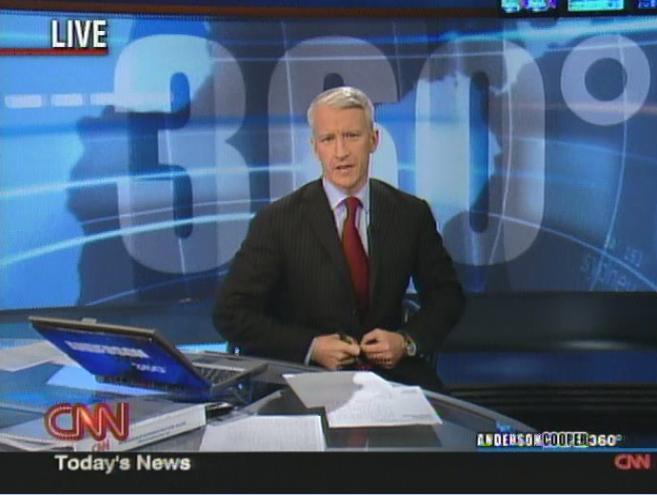
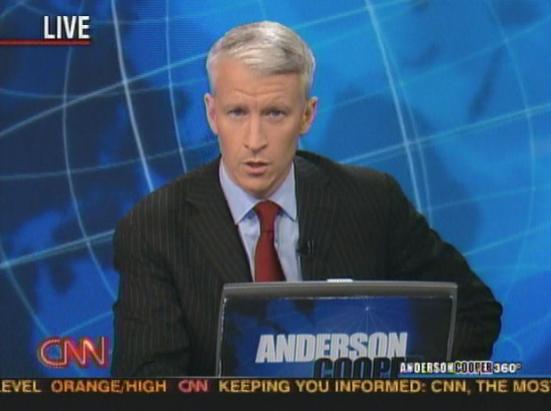
Coop, don’t wear pinstripes two nights in a row. Your ties are divine, the shirts wonderful, but please, vary the pinstriped suit. I know they’re your favorite, but for those of us who pay attention to every detail, and you know we do, give us another selection from the Ralph Lauren or Prada lines.

Wearing the pinstripes two days in a row is a like a woman wearing the same color or even the same blouse two days in a row. You just can’t get away with it…trust me on this from personal experience. Remember, CNN NY is not the middle of Africa, Afrghanistan or New Orleans and the rumpled A&F shirt just won't cut it here (even though I love the look). I know you missed NY Fashion Week while on assignment, so if you need help shopping, give me a call. You know where to find me.

One more little thing, don’t cross your legs on national television. I dig your shoes and at least you wore dark socks. Just remember, we can see what’s really going on under the desk as things are pretty transparent these days.

Thanks to liberation337 at Anderloads for the great caps.

When tragedy strikes near home, by Anderson Cooper

It's always an odd sensation to be reporting on a tragedy like this in your own city. We've all seen accident scenes before, either up close or on TV. There's a pattern to them, a routine, but it's always a shock to see one up close.I think that's why so many people stand around and stare, watching police and firefighters do the jobs they've trained for.We saw the smoke from our offices, and I jumped in a cab as soon as I could. CNN already had reporters and producers on the scene, and they had found eyewitnesses willing to talk to us on camera.It's raining hard right now and that's driven away most of the curious onlookers. CNN reports two people dead, including Cory Lidle, who owned the crashed plane. Lidle had a wife and a 6-year-old son. Tonight, let's all say a prayer for them and anyone else affected by this accident.

Wednesday, October 11, 2006

Learning Anderson Cooper's language, in case you have a chance of a chat!


Have you ever wondered what Anderson is listening through his earpiece when he is on the air? You can bet is not the new Scissor Sisters CD! A first time visit to a Master Control Room can be quite a an experience. You will probably not understand half of the things the Director and Producer are SHOUTING into their respective microphones and to the crew. These are common PG-Rated Control Room Jargon from CNN. It may vary from different markets in both terms and nastiness. It is a stressful job after all!


  • "What's the bird gonna cost?" How much is the satellite time going to cost?

  • "Faster, Prompter, faster!" The TelePrompTer operator is not keeping pace with the anchor.

  • "Lose the bug." Remove the CNN logo from the bottom right corner of the screen.

  • "That package is crashing." That story is fast approaching its deadline.

  • "He's a donut." Use a reporter's live remote between two stories.

  • "Send a crew to spray the room." Send a camera crew to shoot video without a reporter and producer.

  • "She's on the beeper." The reporter is broadcasting live via telephone.

  • "Go with rolling coverage." Continue extensive coverage of a breaking news story over a period of several hours or more.

  • "Feed it from the pool." Sending video to CNN from a pool camera that is shared by the competitive news and broadcast networks.

  • "Big box, little box." Divide the screen into a little box for a person (anchor) and a big box for live video.

  • "Roll the SOT." SOT stands for Sound Over Tape.

  • "Let's use the weather as an accordion." Use the non-scripted weather report to either shorten or lengthen the show to end exactly on time before local or commercial breaks.

  • "He's out shooting a standup." A standup is the reporter's on-camera appearance during a package.

  • "She's a live pop." A reporter is giving a live report.

  • "The package is a hot roll." A package broadcast live from one of CNN's bureaus.

  • "Feed the tape." Broadcast video from one of CNN's many video feeds.

  • "Roll on the feed." Record video that is coming in from one of CNN's many feeds.

  • "Is that tape raw or cut?" Is the tape edited or unedited?

  • "The bird's going down." CNN is about to lose its time on a satellite.

  • "Kill the package." Pull the story before it is broadcast.

  • "What's the slug?" What is the name of the package?

  • "Float that package." Postpone the broadcast of a package.

Give us your take on this... but keep it clean!

Tuesday, October 10, 2006

The Journalist and The Jijadi

Journalism is a serious matter. Good
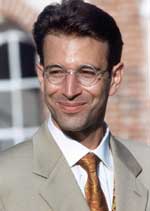
journalism is essential and dangerous. Tonight HBO airs the documentary The Journalist and the Jihadi, the murder of Daniel Pearl.

As you might have read in our previos posts, 35 journalist have been killed to date. The numbers are increasing with the conflicts. And the search for truth is in some cases are death sentences. We hope you might tune in. There are a lot more things about journalists than their ties or sexual preferences. They risk their life for the information. So please don't trivialize their lives nor their sacrifices.


Synopsis

Narrated by acclaimed journalist Christiane Amanpour, THE JOURNALIST AND THE JIHADI: THE MURDER OF DANIEL PEARL was directed and produced by Ahmed A. Jamal and Ramesh Sharma, who gained unprecedented access to many of the key figures in the kidnapping and subsequent murder of Wall Street Journal reporter Daniel Pearl in early 2002. Anant Singh ("Sarafina!," "Cry, The Beloved Country," HBO's Oscar®- nominated "Yesterday") also produced. The debut of THE JOURNALIST AND THE JIHADI: THE MURDER OF DANIEL PEARL coincides with events taking place around the globe between Oct. 6 and 15, and organized by the Daniel Pearl Foundation, which battles cultural and religious intolerance through journalism, music and dialogue. Through the words of Pearl's family, friends and colleagues, as well as FBI agents and State Department employees involved in negotiations for Pearl's release, and those who knew Sheikh best, including former schoolmates and associates, the documentary explores the forces that led to the tragedy. Interviewees also include noted philosopher and author Bernard-Henri Levy; Pakistani police officials; Khalid Khawaja, a retired squadron leader of the Pakistani air force and a former Pakistan Intelligence Officer, known for his links with extreme religious organizations; and Maulana Shamszai, a noted Islamic scholar and the leading source of inspiration for the Taliban, and head of a madrassa (Islamic religious school) in Pakistan. Ahmed A. Jamal has received numerous awards for his films, including "Who Will Cast the First Stone?" and "The Beach Boys of Sri Lanka." Through the independent production company First Take Ltd., he has made several groundbreaking documentaries, including "Dead Man Talking," "The Bounty Hunter," "The Dancing Girls of Lahore," "Camel Kids," "Iran - The Other Story" and "The Fundamental Question." Ramesh Sharma is an award-winning feature film and TV producer-director. His Moving Picture Company India Ltd. is among the leading production houses in India. Sharma's list of credits includes the feature film "New Delhi Times," an award winner at the Karlovy Vary International Film Festival, as well as numerous acclaimed documentaries, including "Rumtek," "Drikung - A Faith in Exile," "Afghanistan - The Taliban Years and Beyond" and "Jihad - The Sword of Islam." THE JOURNALIST AND THE JIHADI: THE MURDER OF DANIEL PEARL is an HBO Documentary Films presentation, co-produced by Moving Picture, First Take Ltd. and Distant Horizon. Directed and produced by Ahmed A. Jamal and Ramesh Sharma; producer, Anant Singh; narrated by Christiane Amanpour; written by Amit Roy; edited by Tony Appleton; music by David Heath. For HBO: executive producers, Sheila Nevins and Lisa Heller.

http://www.danielpearl.org/

Raping Anderson Cooper, again and again

I am sick of all the speculation over the private life of Anderson Cooper. Maybe those obsessed with it are more "sick" than me. Other than mine, I don't really care much about who sleeps with whom. That kind of American Obssesion only help to distract public focus of the things that really matter. Just check today's most popular news... Nicole Richie and Paris Hilton eating together wins over a landslide to the North Korea story.

Today I was censored, again, by a blog administrator. Me and my big mouth! In no way I'm re-printing the original post of that site because its content goes against the editorial lines of THIS blog, but the money quote was:

"Today is a free comment day. Only one rule, it's gotta be about Andy and only Andy or at least closely related to Andy, 'cause all I want today is Andy, Andy and more Andy. (P.S. I've been listening to Ta-Dah while writing this post.... She's my man, And we got all the balls we need....)"

Talking about Hezbollah and media manipulations...

My deleted answer:

"Do you have any proof, other than rumors, speculation, and unreliable sources or a direct answer from him that can prove your statement?I think the speculation is completely rude and out of order. It is nobody business. It is not news or for public consumption. Unless he is a pedophile or a rapist. His sexual orientation, whatever it is, is for his own pleasure and with whom he wish to share it. Two's company three is a crowd. And the last time I checked, the privacy of a bedroom was still protected constitutionally. It is very sad that after all the kudos he received for the Congo coverage, particularly for the stories of the rapes, he has to tolerate the RAPE OF HIS PRIVACY. Again and again. What does people gain with this? How this affect the world? Are people sleeping better and more safetly after Thomas Roberts announced he was gay? The world is still the same. And we are not making it better violating Constitutional or Human Rights."

At our website: www.freakspeaker.com we did an indepth analyis over censorship and blogs. When The Search For Entertainment Crashes Against Constitutional Rights, in where we explore different angles of the blog business, In Gossip Blogs: Freedom of Speech or Blunt Opportunism, we profile Nick Denton and his blogosphere empire, the product of Appreciation vs Obsession, Stalking and the Dan Rather case, where his assaultant was convicted for murdering a NBC stagehand in 1994.

Being a blogger or a webmaster doesn't give you a free pass for publishing everything. It is ruled by the same responsibilities that other media outlets have.

In order to help the blog community we have two important resources at our website ( www.freakspeaker.com) the
Legal Guidelines For Bloggers And Webmasters, the BBC's guide, How to Avoid Libel and Defamation and SHOULD I BELIEVE IT?: A GUIDE TO CRITICAL EVALUATION OF BLOGS, IMAGES AND NEWS.

Some quick FACTS:

Do blogs have the same constitutional protections and responsibilities as mainstream media?
Yes. The US Supreme Court has said that "in the context of defamation law, the rights of the institutional media are no greater and no less than those enjoyed by other individuals and organizations engaged in the same activities."

What are private facts?
Private facts are personal details about someone that have not been disclosed to the public. A person's sexual orientation, a sex-change operation, and a private romantic encounter could all be private facts. Once PUBLICLY DISCLOSED BY THAT PERSON, however, they move into the public domain.

What is defamation?
Generally, defamation is a false and unprivileged statement of fact that is harmful to someone's reputation, and published "with fault," meaning as a result of negligence or malice. State laws often define defamation in specific ways. Libel is a written defamation; slander is a spoken defamation.
What is a statement of verifiable fact?
A statement of verifiable fact is a statement that conveys a provably false factual assertion, such as someone has committed murder or has cheated on his spouse.

What is "Libel Per Se"?

  • Charges any person with crime, or with having been indicted, convicted, or punished for crime;
  • Imputes in him the present existence of an infectious, contagious, or loathsome disease;
  • Tends directly to injure him in respect to his office, profession, trade or business, either by imputing to him general disqualification in those respects that the office or other occupation peculiarly requires, or by imputing something with reference to his office, profession, trade, or business that has a natural tendency to lessen its profits;
  • Imputes to him impotence or a want of chastity.

What is a "false light" claim?

Information presented in a "false light" is portrayed as factual, but creates a false impression about the plaintiff (i.e., a photograph of plaintiffs in an article about sexual abuse, because it creates the impression that the depicted persons are victims of sexual abuse). False light claims are subject to the constitutional protections discussed above.

We would really like to know your opinion about this. Do you really think it is cool to invade Anderson Cooper's private life, if it is fair game... or are me on the right track.

Freak Back!

Monday, October 09, 2006

Before Anderson Cooper, it was Bernard Shaw. Before Katrina, it was Baghdad ‘91

Back in 1991, I just landed a new job working in a news department of a local TV station. We were a bunch of aggressive kids wanting to be the next generation of Barbra Walters or Bernard Shaws. Idealistic, not very media management savvy and whom truly believed in the freedom of press and the “heroism” of journalists.

Those times were different. No Internet. No MS Windows, mostly typewriters. No digital cameras. Analog forced you to be more creative, more resourceful, and ingenious. If you were lucky you could wire your story or if available, fax it. Then someone in the newsroom would copy it into the system. For video you needed to work with local stations with satellite uplinks. If not, pray for UPS, FedEx and the airlines to transport the visual material. If lucky, immediately was a 24 hours thing. Now everyone takes a picture with a camera phone and seconds away it is all over the world. Back in the early ‘90s if you were working with color film you could expect photojournalists to develop their films in the water tanks of their toilet at their hotel rooms. So glam!

I was just a baby when the Vietnam War ended. I have no memories of it. And my war references where only stock, archival photos and videos or documentaries. But on January 16 , 1991 the Boys from Baghdad changed it. I remember sitting on the floor of the newsroom at awe watching for the first time a Live Coverage of a War. Billions of people turned into CNN to know what was happening in Baghdad. Right then, CNN single handily changed the news industry, and the war was right there in your living room for the very first time. No one had ever covered a war live from behind enemy lines as it happened. Bernard Shaw, Peter Arnett and the late John Holliman became our eyes and ears. First hand witness of the Bush administration “surgical bombings” over the city.

A certain déjà vu
This weekend technology betrayed me. But in a leap of faith, I catch a movie I always recommend to my students: Live from Baghdad. It is based on CNN’s breakthrough coverage of First Gulf War or commonly known as Operation Desert Storm. That movie always takes me back to the early 1990’s. And it is a quite accurate of the things that goes behind the scenes of what you watch on the news in your TV set. But it also saddened me to recognize how the edge or hunger for news innovation that that generation had, has diminished trough the years. News people have softened their voices afraid to loose their access to official sources. And those who were brave enough to face authorities, like Anna Politkovskaya, are silenced by cowards.

Baghdad's Al-Rasheed Hotel Suite 906

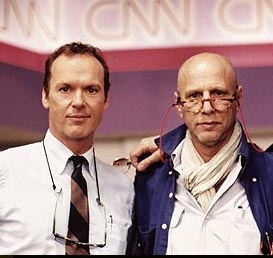
The movie Live From Baghdad is a recreation of what happened in the Suite 906 of the Al-Rasheed hotel. Thanks to a “four wire” transmitter CNN was able to transmit during the siege of Baghdad. The official synopsis states that this production mixes breakneck excitement, biting humor and blistering drama in telling the behind-the-scenes true story of how brash CNN producer Robert Wiener (Michael Keaton) and his resourceful team made history, and reported it, during the onset of the 1991 Gulf War. Arriving in Baghdad, Wiener and co-producer Ingrid Formanek (Helena Bonham Carter) contend with numerous logistical, technical and political challenges as they attempt to report on the situation in Baghdad as war looms. While feeding stories to a hungry 24-hour news network under the scrutiny of Iraqi censorship and Saddam's propaganda efforts, the two producers must stay ahead of the competition - the Big Three networks. When the bombs hit Baghdad on January 16, 1991 (most of the other news crews have fled the city), the ingenuity and courage of Wiener, Ingrid and their crew (including CNN anchor Bernard Shaw and reporters Peter Arnett and John Holliman) pay off when they are able to use a coveted "four-wire" transmitter to relay live reports on the U.S. bombing of Baghdad not just to America, but the entire world.

Far off characters? No. Some of them are still around... and in CNN. Lets meet the real Boys from Baghdad:


Michael Keaton and CNN Producer Robert Weiner
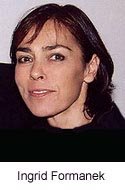


Ingrid Formanek
CNN Senior News Producer
Today, when not covering war zones, Formanek lives in Botswana with her husband, CNN cameraman Brian Puchaty, whom she met while covering the U.S. invasion of Haiti ("another romantic spot," she says dryly). They moved to Africa hoping to produce documentaries on wildlife, but were so struck by the AIDS epidemic that they instead made what Formanek calls a "do-gooder"--an educational film for Botswana schools on the disease. They also recently worked with Jane Fonda in Nigeria on a documentary about teen sexual health.
But Formanek says that what is most important to her is maintaining integrity, and resisting the trend of what she calls "more style than substance" in the media. She believes that the American media she so admired as child is in peril.
"I don't know if it's post-9/11 or a new patriotism or a fear of being seen as anti-American after President Bush's famous words 'You're either with us or against us,'" she says, "but I think we need to question actions and policies as much as we did before and keep governments honest."
She points to the trend among American journalists to say "we" instead of "the Bush administration" in statements such as, "We are bombing Iraq," as well as the tendency of news anchors and reporters to wear American flag pins on their lapels. She says these actions makes the jobs of foreign correspondents ever more dangerous and threatens reporters' credibility among foreign governments to tell the whole, unbiased story.
"People in the news business are buying into the government PR line," she says. "It's a trend that we are seeing and we have an obligation to fight it."

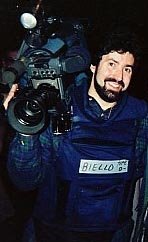
Mark Biello

A Katrina hero: Photojournalist Mark Biello
CNN Photog Saves Lives Following Hurricane

Source: Associated Press David Bauder writes: "Journalism may be the only profession where someone who helped save more than a dozen lives felt compelled to reassure his bosses that his time was well spent.The night after Hurricane Katrina struck, veteran CNN photographer Mark Biello brought back vivid images of New Orleans residents rescued from floodwaters that chased them to roofs or attics. Some he pulled into a boat himself.Biello isn't used to putting his camera down - journalists are trained to be observers, not participants. But the human misery caused by Katrina put these instincts at war with reality, and made many journalists rethink how to do their jobs amid calamities.
After riding out the storm in a French Quarter hotel, Biello met CNN correspondent Jeanne Meserve at the Superdome. A distraught city councilman drove up and said his Ninth Ward neighborhood was submerged. The CNN team jumped in their car and followed him there.Biello, 44, has worked for CNN since 1983 and been to 81 countries, recording famine, disaster and the bombs that flew over Baghdad in the first Gulf War. But even he was shocked by what he saw from a New Orleans highway overpass."We did not know the extent of how many people were trapped," he said. "Nobody did ... As far as we could see in all directions you could hear people screaming and yelling, waving, some were drowning."Three men pulled up in a boat. Biello asked if he could come along.Their first rescue was a husband and wife plucked from a roof, arguing with each other as they stepped onto the boat."I was just recording and witnessing what they were doing," he said. "It wasn't until there were people submerged in the water that they asked for my help in pulling people onto the boat ... they needed the physical strength to pull people up." The filthy New Orleans water gave Biello a serious chest infection. But he was back in Louisiana for Hurricane Rita.


Bernard Shaw

Bernard Shaw and Tom Johnson

January 1991, Shaw stayed behind -- with Peter Arnett and the late John Holliman -- after other Western reporters had deserted the city. As bombs rained down on the city outside their hotel window, the three, reporting by phone, coolly brought those images into living rooms across the world during the first attacks of the Persian Gulf War.
"All kinds of ordnance was being dropped, all kinds of bombs, and I made my peace with myself that I could die at any moment," Shaw told CNN recently. "We knew the dangers around us. I always believed that two major forces -- one of them supreme -- saved us that night: God and some extremely well trained and well disciplined American pilots."
Throughout his career, Shaw -- a history major in college -- was often an eyewitness to some of the biggest events of the last quarter-century, a position he did not take lightly.
"Whenever I found myself with a box seat on a historic story, the one thing I always strove to do was realize I had a responsibility ... It made me focus even more on the disciplines of journalism -- being fair, being accurate." "[You also need to have] regard for viewers, listeners and readers," he continued. "If people are depending on you, if you are the only source of accurate information, you have a dreadful responsibility. I say dreadful because it's so awesome."Shaw went on to become a household name with his reports from Baghdad, Iraq, in 1991 at the start of the Persian Gulf War. As bombs exploded outside his hotel window, Shaw coolly brought those images into living rooms across the world.

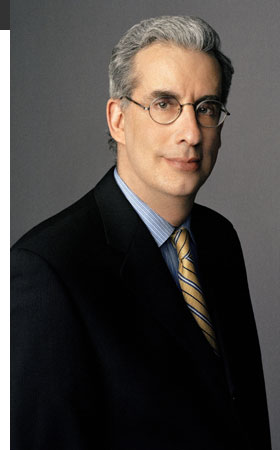
Richard Roth
From 1991-1992, Roth was part of the CNN team covering the Gulf War. Most recently, Roth was portrayed in the HBO movie Live from Baghdad. He's reported from Amman, Jordan, and Baghdad, where he was deployed for 65 days, as well as from Tel Aviv during a number of Iraqi Scud missile attacks.
In 1990, Roth served as CNN's correspondent at the opening of the Berlin Wall and the overthrow of the communist governments in Czechoslovakia and Romania. In 1989, he covered the Beijing student uprising in Tiananmen Square and the ensuing Chinese government crackdown. Roth also has covered the terrorist attacks on the Achille Lauro cruise ship and at the Leonardo DaVinci Airport in Rome, both in 1985. He reported on the 1980 Winter Olympics in Lake Placid, N.Y., as well as the 1980 Democratic National Convention in New York.
Roth joined CNN when it launched in 1980 as an assignment desk editor in the network's New York bureau. He served as CNN's New York assistant bureau chief in 1981, the Chicago bureau chief in 1982 and the Rome bureau chief from 1982-1986. Before joining CNN, Roth worked as an anchor and reporter for AP Radio and as a producer for WPIX-TV in New York.
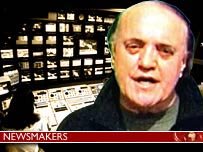
Peter Arnett
Arnett received a Pulitzer in 1966 for his work as an Associated Press reporter in Vietnam. By the time of the Gulf War he had become CNN's premier international correspondent. He came under criticism at that time from government and military circles for his objective reportage of civilian casualties resulting from the US bombing of Baghdad.
Last summer the Pentagon, backed by retired military brass, prominent political figures and associations of special forces veterans, began a campaign to drive him off of the air waves. The occasion was an investigative report aired by CNN on June 7, entitled "Valley of Death."
The segment, narrated by Arnett, concerned Operation Tailwind, a secret incursion by Army special forces into Laos in September of 1970. The TV report, a joint production of CNN and Time magazine, presented compelling evidence that US commandos had used deadly sarin gas in an operation to kill American soldiers who had defected into Laos from Vietnam.
"Valley of Death" included interviews with Tailwind commandos, statements from high-level (unnamed) veterans of the military and intelligence apparatus, and an on-camera discussion with retired Admiral Thomas Moorer, who was chairman of the Joint Chiefs of Staff at the time of Operation Tailwind. Top CNN news executives reviewed and approved the segment prior to its airing.
The program evoked public attacks and private protests from Pentagon officials, the Special Forces Association, and figures such as retired General Colin Powell and former Secretary of State Henry Kissinger. The latter, who was Nixon's national security adviser at the time of Tailwind, would be directly implicated in the illegal actions alleged in the CNN report. Powell and Kissinger, among others, contacted CNN executives and demanded that they retract "Valley of Death" and issue a public apology to the military and special forces groups.
CNN quickly caved in, issuing an ostensibly "independent" review of the program in early July, while concealing the fact that the review had been co-authored by the network's general counsel. The review acknowledged that "Valley of Death" was based on exhaustive research and "considerable supportive data," and rejected any allegation that the producers had falsified evidence. Nevertheless, it recommended that CNN retract the story, which the network immediately did.
The co-producers, April Oliver and Jack Smith, refused to knuckle under and disavow their report. They were promptly fired, and their senior producer resigned. Arnett took the ignoble course of denouncing his own story in an attempt to save his job. Instead of being fired, he was publicly reprimanded.
This, however, satisfied neither the right-wing Special Forces Association nor the military and intelligence establishment. They were determined to humiliate Arnett, silence him and ultimately force him off the CNN payroll. They wanted to send an unmistakable message to any journalist who might be inclined to investigate illegal actions by the Pentagon and the CIA, or in any way deviate from the official Pentagon line. If a man of Arnett's reputation could be purged, no reporter was safe.
At the time of the "Valley of Death" controversy, the Pentagon bluntly told CNN management that the network would be effectively quarantined if it did not fire Arnett. As the Wall Street Journal reported on July 8, 1998: "Military officials continue to press the network to dismiss Mr. Arnett."
The Journal went on to quote Retired Major General Perry Smith, a former CNN consultant who had resigned in protest over the Tailwind report. "Gen. Smith said he told Mr. Johnson [Tom Johnson, chairman of the CNN News Group] that US military leaders felt that dismissing Mr. Arnett was the only way the network could regain its credibility in light of the nerve gas report. Pentagon spokesman Kenneth Bacon has criticized the CNN report, and the network said 'hundreds' of former military officials, including former Gen. Colin Powell, have come forward to complain. " 'I basically told Tom you have no choice if you ever hope to have a relationship with the US military,' Gen. Smith said."
While CNN did not immediately fire Arnett, it effectively banished him.
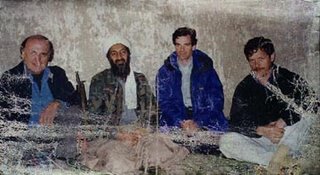

LEFT TO RIGHT PETER ARNETT 1997 CNN REPORTER, OSAMA BIN LADEN, PETER BERGEN CNN PRODUCER, SINCE WRITTEN BEST SELLING BOOK ON BIN LADEN, PETER JUVENAL CNN CAMERA MAN

John Holliman

Holliman joined CNN in 1980 as part of the network's original reporting team and was the first correspondent hired for the Washington, D.C., bureau.He was one of only three journalists reporting from Baghdad in January 1991 when the allied air attack began on Iraq's capital during the Gulf War. He and colleagues Peter Arnett and Bernard Shaw played critical roles in CNN's coverage of the crisis, which won a National Headliner Award, the George Foster Peabody Award and a Golden Microphone Award.
"When the bombing started, we immediately lost power, so we thought we wouldn't be able to broadcast," Peter Arnett said. "But then Holliman went to our equipment and just switched out the batteries, and we were able to communicate for several days like that with the hounds of hell falling on our heads."
"He's the one who made that first broadcast possible. He had a real knowledge of broadcasting," Arnett said.

Nic Robertson

His first role on joining the network in January 1990 was as an engineer, and during the 1991 Gulf War, he was the only CNN engineer in Baghdad. He was also responsible for the first live satellite links out of Iran, Ethiopia and Iraq. His knowledge of technology has been beneficial both as a producer and a reporter. In the remotest of regions without electricity and telephones, such as Afghanistan, he has been able to file reports via the latest in technological advancements such as TOKO receivers and digital videophones.
Based in the network's Chicago bureau from 1991-1993, Robertson was producer for CNN's award-winning Bosnian War team from 1992-1995 and was also part of CNN's Emmy Award-winning team for the live coverage from the shores of Mogadishu, Somalia, as the U.S. troops launched operation Restore Hope in 1992. In 2002, Robertson won an Alfred I. duPont-Columbia Award for his reporting for the 2001 CNN Presents' "Northern Ireland: Dying for Peace" documentary.

In 2003, Robertson reported live from Baghdad until officials expelled the CNN group just hours before the coalition bombed the city. Robertson taped the bombings as they were fleeing and that footage later aired on CNN as an exclusive. After leaving Baghdad, Robertson reported from Jordan, often offering insight into the latest reports coming from Baghdad. He later returned to Baghdad to report on the latter stages of coalition movement into the city.

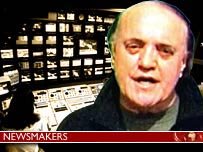
Eason Jordan
Jordan worked for 23 years with CNN, where he rose through the ranks to become the network's Chief News Executive and President of Newsgathering and International Networks. Jordan oversaw CNN's news coverage, global expansion, and international relations. He orchestrated CNN's award-winning reporting of the wars in Iraq, Afghanistan, former Yugoslavia, and Somalia. He also directed CNN's coverage of the September 11, 2001 terrorist attacks, the collapse of the Soviet Union, and the 1989 crackdown in Tiananmen Square. After two of his CNN colleagues were killed by insurgents in Iraq in 2004, Jordan co-founded and co-chaired the Iraq News Safety Group, and on behalf of the Group met senior U.S.and Iraqi officials to address the safety concerns of news organizations whose journalists report from Iraq.
CNN News Group President Jim Walton said that under Jordan's leadership, the news group "literally circled the globe with bureaus, from Baghdad to Johannesburg to Havana to Sydney to Hong Kong." 10 of his CNN colleagues were killed in Iraq and Somalia. Jordan felt a top-notch news and safety tip service produced for employers and their employees in war zones would empower those at risk to make more enlightened judgments about their movements and actions—perhaps saving lives. "The regard in which he is held by people from every walk of life in virtually every corner of the world has added incalculably to our ability to cover such historic events as the Gulf War and the war in Iraq, the collapse of communism in Eastern Europe, the crackdown in Tiananmen Square and the attacks on the World Trade Center and the Pentagon," Walton said in a written statement to colleagues.
He resigned to CNN due to a controversy that exploded after his remarks about the deaths of journalists in Iraq threatened to tarnish the network he helped build. Several participants said he told the audience that U.S. forces had deliberately targeted some journalists. The Center to Protect Journalist has stated that journalist are indeed target of the USA forces in Iraq. For more information: HERE

Tom Johnson
Tom Johnson joined CNN as president on August 1, 1990 -- one day before Iraq invaded Kuwait. In 1998, during Johnson's tenure as chairman, a Wall Street Journal/NBC national poll named CNN the "most trusted" news organization. "Tom presided over a dramatic expansion of CNN's newsgathering operations and led the network into the age of digital interactivity," said Gerald Levin, chief executive officer at AOL Time Warner. "Throughout his tenure, he's upheld and enhanced the traditions of journalistic integrity and independence that distinguish CNN as the world's foremost news brand


Ed Turner 1936-2002
"He regarded everyone who picked up a camera, who edited a piece, who ran an assignment desk, who cut a package, who sound-teched with equal regard," said John Zarrella, CNN's Miami bureau chief. "Everyone was part of the process and without everyone ... that fell apart."
Ted Turner hired Ed -- no relation -- and a small group of other news professionals in 1980 to make around-the-clock television news an engaging and profitable reality. Ed Turner remained at CNN until 1998, when he left his position as vice president in charge of newsgathering.
"It was a crusade, absolutely," Ed Turner once told a magazine at his alma mater, the University of Oklahoma, regarding the network's early days. "No one knew whether it would work, but the challenge was too great not to have a go at it."
Turner's innovative approach helped CNN invent itself in the '80s and '90s, as he sent hundreds of journalists around the world. Under his leadership, the network broadcast countless live events, including the billiard room rape case in New Bedford, Massachusetts, the Claus von Bulow trial and the Solidarity uprising in Poland.

"You can almost reach out and touch Ed Turner's impact on CNN," said Bernard Shaw, an original CNN anchor. "His standards were so high. The things that this network does routinely and the kinds of people that work for CNN ... are a testament to what Ed Turner stood for."
"More than anything, Ed will be remembered as the newsman's newsman," said former CNN News Group chairman and CEO Tom Johnson. "He could be so tough on his people in his pursuit of getting it right and getting it first, but he could also be a wonderful teacher."


Naji Al-Nadithi

Iraqui former minister of Information and alleged CIA mole that gave the USA assurance of the existence of Weapons of Mass Destruction... we know how that ended.

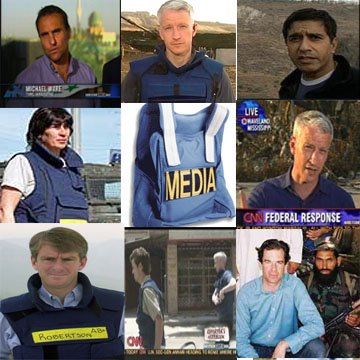
Monday Morning Starts with a Bang

WASHINGTON (CNN) -- Speaking from the White House, President Bush on Monday called North Korea's claim of a nuclear test "a provocative act" and said the United States is working to confirm that such a test was carried out.

"Once again North Korea has defied the will of the international community and the international community will respond," Bush said.

After speaking with the leaders of South Korea, Russia, China and Japan, Bush said the nations agree on an "immediate response by the United Nations Security Council."

The council will consider the matter during its session on Monday. (Posted on CNN 10:12 a.m.)


Great. A wacko with a penchance for Hollywood films now has nuclear capabilities. A word of advice to G.W., start working on how to pronounce "nuclear" now. You're going to be saying it quite a bit in the days to come.

On an Anderson note, don't expect to see him standing in front of the video wall tonight. He has a speaking obligation in San Francisco with none other than Tom Brokaw. So, you'll most likely get one hour of the "I Try Hard to Be Snarky" John Roberts as the second hour of "360" has been interrupted to bring us a repeat of "CNN Presents: Undercover in the Secret State."

UPDATE: David Doss just blogged about tonight's show. No mention of Anderson and whether he would be hosting or not. In my humble opinion, it would behoove Cooper to host the first hour and not let John Roberts take the reigns on this show and its subject matter....a possible $40,000 speaking fee be damned.

Saturday, October 07, 2006

More on the Murder of Anna Politkovskaya

Photobucket - Video and Image Hosting
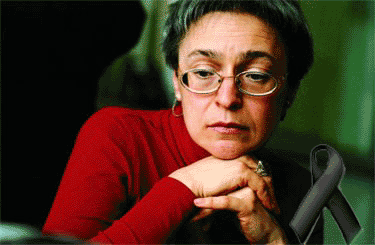
A man lays flowers in front of Russian journalist Anna Politkovskaya's house where she was found dead in central Moscow October 7, 2006.

MOSCOW, Russia (AP) -- A Russian journalist known for her critical coverage of the war in Chechnya was shot to death Saturday in the elevator of her apartment building in Moscow, in a killing prosecutors believe could be connected to her investigative work.

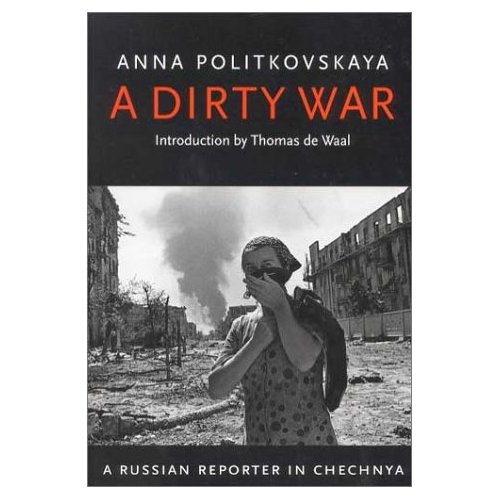
Anna Politkovskaya was a tireless reporter who had written a critical book on Russian President Vladimir Putin and his campaign in Chechnya, documenting widespread abuse of civilians by government troops.

Prosecutors have opened a murder investigation into her death, said Svetlana Petrenko, spokeswoman for the Moscow prosecutor's Office. Investigators suspect the killing was connected to the work of the 48-year-old journalist, Vyacheslav Raskinsky, Moscow's first deputy prosecutor, said on state-run Rossiya television.

Politkovskaya's body was found in an elevator in her Moscow apartment building, a duty officer at a police station in central Moscow told The Associated Press. Raskinsky said a pistol and bullets were found at the site of the crime. The RIA-Novosti news agency, citing police officials, reported that Politkovskaya was shot twice, the second time in the head.

Oleg Panfilov, director of the Moscow-based Center for Journalism in Extreme Situations, said Politkovskaya had frequently received threats. A few months ago, unknown assailants had tried unsuccessfully to break into the car her daughter Vera was driving.

In 2001, Politkovskaya fled to Vienna for several months after receiving e-mail threats alleging that a Russian police officer she had accused of committing atrocities against civilians was intent on revenge. The officer, Sergei Lapin, was detained in 2002 based on her allegations but the case against him was closed the following year.

"Whenever the question arose whether there is honest journalism in Russia, almost every time the first name that came to mind was Politkovskaya," Panfilov said.

Politkovskaya began reporting on Chechnya in 1999, during Russia's second campaign there, and concentrated less on military engagements than on the human side of the war. She wrote long, empathetic stories about the Chechen inhabitants of refugee camps and Russian soldiers she found in hospitals -- until she was banned from visiting those hospitals, Panfilov said.

More than any other Russian reporter, Politkovskaya has chronicled killings, tortures and beatings of civilians by Russian servicemen -- reports that put her on a collision course with the authorities.

"There are journalists who have this fate hanging over them," Panfilov said. "I always thought something would happen to Anya, first of all because of Chechnya."

Politkovskaya fell seriously ill with symptoms of food poisoning after drinking tea on a flight from Moscow to southern Russia during the school hostage crisis in Beslan in 2004, where many thought she was heading to mediate the crisis. Her colleagues had suggested the incident was an attempt on her life.

She was one of the few people to have entered the Moscow theater where Chechen militants took hundreds of hostages in October 2002 and tried to negotiate with the rebels.

"Anna was a hero to so many of us, and we'll miss her personally, but we'll also miss the information that she and only she was brave enough and dedicated enough to dig out and make public, and that's a loss that I'm not sure can ever be replaced," said Joel Simon, executive director of the New York-based Committee to Protect Journalists.

Politkovskaya's death is the highest-profile killing of a journalist in Russia since they July 2004 slaying of Paul Klebnikov, editor of the Russian edition of Forbes magazine.

Russia has become one of the deadliest places for journalists. Twenty-three journalists were killed in the country between 1996 and 2005, many in Chechnya, according to CPJ. At least 12 have been murdered in contract-style killings since Putin came to power, Simon said.

"None of those have been adequately investigated," he said. "We do know that record creates an environment where those who might seek to carry out this murder would feel that there would be few likely consequences."

In addition to her daughter, Politkovskaya is survived by a son, Ilya, Panfilov said.

During her career, Politkovskaya received more than 10 awards and prizes, including an award for human rights reporting from the London-based Amnesty International; a freedom of speech award from the Paris-based watchdog Reporters Without Borders; and a journalism and democracy award from the Organization for Security and Cooperation in Europe.

The Danger of Telling the Truth

"“People sometimes pay with their lives for saying out loud what they think. People can even get killed just for giving me information. I am not the only one in danger. I have examples that prove it.”Anna Politkovskaya

Report: Russian reporter dead, police think she was murdered

MOSCOW (CNN) -- A Russian newspaper reporter who has criticized Russia's Chechnya policy has died and police think she was murdered, a Russian news agency reported Saturday.

Interfax reported the death of Anna Politkovskaya, who worked for Novaya Gazeta. A neighbor found her wounded by a bullet late Saturday afternoon in her building's elevator.

A handgun and four cartridge cases were also found.

Dmitry Muratov, the newspaper editor, theorized that she was being punished for stories. A law enforcement source said a young man might have been involved in the incident and police were looking for him. (Posted 10:55 a.m.)

2003 Time Europe Magazine Hero

Mighty Pen: Politkovskaya braves the hell of Chechnya to get the truth
Disquiet On The Chechen Front

BY YURI ZARAKHOVICH MOSCOW
Anna Politkovskaya, a correspondent for the Moscow biweekly Novaya Gazeta, was in Los Angeles last October, picking out her dress for a media awards ceremony, when some staggering news came from Moscow: Chechen terrorists were holding 850 hostages in a theater. The Russian authorities tried to send in negotiators, but the Chechens refused to see most of them. They asked for Politkovskaya.
And so Politkovskaya rushed back to cover yet another episode of one of the world's nastiest and longest wars, which this time had shifted to Moscow. The terrorists, she says, "wanted someone who would accurately report things as they were. My work in Chechnya makes people there feel that I don't lie. But there wasn't much I could do for the hostages anyway." She carried water and fruit juice to them, and reported their dejection and feelings of doom to the world. Two days later, Russian special forces stormed and gassed the theater, killing 41 terrorists and 129 hostages.
Politkovskaya, 44, made her name by writing detailed, accurate and vivid reports on the plight of the civilian population in Chechnya, caught in the horrors of war since 1994. She tells stories of people who are taken from their homes at night and never come back; about extrajudicial executions; about the hungry refugees in cold and damp camps. "It was the refugee problem that started it," she now recalls. When the second Chechen war began in 1999, tens of thousands of refugees began flooding the makeshift relief camps. "It was horrible to stand among the refugees in the field in October 1999, and see cruise missiles flying over your head," she recalls.
When those missiles hit a market in Grozny, it was only prompt coverage by journalists like Politkovskaya that forced the Russian commanders to let ambulances in and refugees out. "Our work is a lever to help people as much as we can," she believes. But it also causes trouble. In February 2000, the FSB (the former KGB) arrested Politkovskaya in the Vedeno district of Chechnya. They kept her in a pit for three days without food or water. "It was important not to let them kill me on the first day," she says. A year later, a Russian officer whose war crimes Politkovskaya had exposed threatened to kill her. Novaya Gazeta had to hide her in Austria for a while. The officer is now awaiting trial on charges of war crimes committed in Chechnya that Politkovskaya was the first to report. "But I don't feel victorious," she says. "I only feel that we're all involved in a great tragedy."
Her editors have had to stand up to pressure from the Kremlin, which is often infuriated by her reporting. Novaya Gazeta balances on the brink of forcible closure. "Well, it goes with the job," she shrugs. Politkovskaya has long since learned to keep her anxieties in check. As she arranges yet another trip to Chechnya, she may now be too famous to be targeted by the FSB. But she really doesn't think about such things. "If you don't have the strength to control your emotions, you're of no help to the people who are in such shock and pain. You only add to their burden," she says.
©TIME. Published April 28, 2003

FreakSpeaker Note:
During the September tragedy in Beslan, award-winning journalist Anna Politkovskaya, while attempting to report and mediate in the crisis, was silenced by what has become known as the Kremlin's poison politics. After her recovery, Politkovskaya continued to report on human atrocities in the war-torn region and speak on behalf of the thousands of victims of Russia's 10 year campaign in Chechnya. In her first visit to the United States since Beslan, Politkovskaya discussed the upsurge in civilian casualties and Vladimir Putin's unequivocal drive toward authoritarianism. As the West is reconsidering its rapprochement with Russia, commentator Dr. Michael McFaul, Senior Fellow at Stanford's Hoover Institution, addressed the Kremlin's post-Beslan policies, growing public discontent with the Putin administration, and the implications and opportunities for U.S. policy.

Hear her speech HERE

2 German journalists killed overnight in northern Afghanistan

KABUL, Afghanistan (CNN) -- Two German journalists traveling in northern Afghanistan were killed overnight, Afghanistan's Interior Ministry and NATO's International Security Assistance Force said Saturday.

They were working for German news agency Deutsche Welle. The two -- who were on a road between Baghlan and Bamian province -- were killed by gunmen in Baghlan, said Zemari Bashary, Interior spokesman.

They had been spending the night in a tent by the road when they were killed around 1 a.m. Saturday. The location is north of the capital, Kabul.

Maj. Dominic Whyte, an ISAF spokesman, said they were operating independently of ISAF at the time of the incident.

It is not clear whether the perpetrators were Taliban, other militants or thieves. The area is not known for Taliban activity. But it does have some level of activity from a militant group called Hezb-e-Islami, led by Gulbeddin Hekmatyar, a renegade warlord. (Posted 10:20 a.m.)

Anderson's Partner in Snarky Crime

A view of the Hill: Is the CNN anchor the future of broadcast news?

In the end, it turns out that Katie Couric - the defection, the build-up, the hype, and the legs - is just another talented person reading the news.

Some credit her with investing the news with a bit of personality, but on that front, she’s not alone.
For the past few months, CNN Headline News has been broadcasting "Prime News with Erica Hill," a daily hour-long show of international and national news, noteworthy trend pieces, and a little bit of fluff to soften the edges.
Anchor Erica Hill, a summa cum laude Boston University graduate, performs with a style that may be the future of broadcast news. She doesn’t just read the news. She leans into the camera for emphasis; her eyebrows shoot up and down in either fascination or concern; she reveals a gallery of facial expressions, depending on the subject. She always shows a palpable interest in what she’s talking about, coming across as strictly serious on the straightforward stories, light and effervescent on the goofy ones.
And she defines "telegenic."
Earlier in the year, she came in at number 35 on People Magazine’s annual "100 Most Beautiful People" list.
"I found out about that from my husband’s cousin," she says with a giggle, from her home in Atlanta, which she shares with her lawyer husband David and their dog Jake. "She called me at work. She was freaking out. She said, ’You’re in "People"!’ It was very surreal, and no one knew it was happening. But my husband was pretty excited about it, and I was very flattered.
"I’d rather people see me as an intelligent woman," she adds. "But it’s not bad if I’m attractive."
Hill, 30, never had a plan to be a TV anchor. In fact, there weren’t any career thoughts of the news.
"I think broadcast journalism was my fourth or fifth major," she says of her B.U. days. "I had some writing professors who said I was doing well in writing, why not move into journalism. So I did."
While in Boston, she enjoyed the club scene - M-80, Avalon, the Paradise.
"Then on a different night I would like a good Irish bar," she says laughing. "You had to be well rounded."
But the journalism bug bit hard. She landed a post-graduation job at the fledgling technology-based cable TV station ZDTV in San Francisco, which morphed into Tech TV.
"I did everything there," she recalls. "I learned how to hone my writing skills, I learned better how to put together a package for television. I learned how to produce a story, how to produce a newscast. And I was allowed to grow a little bit more on air.
"I never started out with the goal of being on air," she adds. "I wanted to be a producer. Maybe it’s because I like to control things a little bit. But I never wanted to be just another girl on TV. I thought I was smarter than that. But they sort of threw me into it, and it was something that I felt comfortable doing."
After a friend got a job at CNN, he told everyone he knew to send him a tape to pass along. Two weeks after Hill sent hers, she got a call.

"They flew me out for this whirlwind 24 hours of interviews and audition," she says. " And a couple weeks later I got a job offer."
Hill’s answer is immediate when asked about the responsibility of TV news.
"To present people with the facts, to do it in an unbiased matter, and to let people make their own decisions. But to make sure they have the information that they need to make an informed, educated decision."
As far as her entertaining presentation of that news, she says, "I’m telling a story. I think that’s just me. I’m not acting. You’re just getting Erica, and that’s the way I happen to read the news."
Yet she knows that, as a news anchor, no matter how controversial a story might be, she has to suppress any of her own opinions on a subject.
"That’s my job," she insists. "If I can’t do that, maybe I need to find a job as someone who has an opinion, doing something else. It can be difficult, because everyone has an opinion on something. But you won’t know what mine is, if I’m doing my job well."
She does, however, take part in choosing - and sometimes nixing - stories.
"Because there’s that sort of controllable person inside of me - but in a good way - I like to be involved in the show. It’s important to me that I’m comfortable with what goes on the air because my name is on the show, and it’s my face on the air."
Things are going well personally as well. Hill and her husband are expecting their first child in mid-November. And she admits that the pregnancy has given her new reasons to reflect on the state of the world that she regularly reports on.
"It’s become something that my husband and I talk about a lot," she says. "But you realize that at any given time in the world there are always atrocities. That’s terrible, and I wish I could change that, but I can’t. I can do my small part by making people aware of what’s happening. And maybe spurring them to action in some way."
"Prime News with Erica Hill" is on CNN Headline News weeknights from 6-7 p.m.

Friday, October 06, 2006

Why FreakSpeakers?


Why FreakSpeakers? Is this just another Anderson Cooper fan blog and website?
by Christiane

WELCOME, BIENVENIDOS, BOA VINDA, BENVENUTO, WILLKOMMEN To FreakSpeakers!

Some people have asked us why this blog, and what is the purpose of our website? There are many reasons we could give you, but the biggest reason is our interest in journalism and respect for those who risk their lives in order to keep us informed. As of this date, 31 journalists have been killed in 2006. They either died in the line of duty or were deliberately targeted for assassination because of their reporting or their affiliation with a news organization. It is far from being a glamorous career.

In the past fifteen years, 580 journalists have been killed. Some have been victims of regimes that don't recognize freedom of speech, which is something many of us take for granted.

Speaking of freedom of speech...
The digital era has opened the floodgates of information. What used to be a 24 hour ordeal to air or publish a story, is now a matter of just seconds. The internet and the blogosphere have changed the rules of the game in many ways, but how is still a matter of speculation.

Andrew Kantor from USA Today stated that "Bloggers and other amateur journalists have some of the same problems any amateurs do: They make up the rules as they go, and they run the risk of screwing up and hurting someone. But because blogging isn't their day job, they have little risk — they aren't going to be fired."

Anonymous speculation, libelous information and misleading context are the norm. There are no ethical codes and even established blog entrepeneurs like Nick Denton (owner of Gawker and Wonkette among others) claims that "a blog is much better at tearing things down - people, careers, brands - than in building them up".

Unfortunately, this is an editorial line copied by many, even those blogs dedicated to public figures and published by "fans". Intrusion, speculation, invasion of privacy—they can be justified for celebrities like Paris Hilton or Anna Nicole Smith who sell their personal lives for public consumption, but a journalist? If it is already hard for them to work underground stories due to their visibility, how much more difficult is it with websites discussing their sex lives?

So you can be sure that you won't find that kind of information or discussion about Anderson Cooper on this blog or our website. But what can you expect from us? Facts, context, and complementary information of contemporary news. We have also scheduled a series of exclusive interviews with international journalists in order for you to access the other side of what you see and hear in your daily newspaper, radio or newscast from the people who live it every day.

And Anderson Cooper? We strongly respect Mr. Cooper; few people in the news industry have had as much obsessive attention placed upon them. He has the courage to focus on stories that are not ratings friendly, and although we can disagree with some of his coverage, he is not taking the safe route. And we believe this commands respect.

We'd also like to welcome our newest moderator, Jade Chaos, who as a journalist knows of what she speaks. Thanks for joining the team, Jade! Welcome aboard. Our dear friend and one of the founders of Freakspeakers, Marie, will be our resident health specialist. She will guide us in all scientific related topics, and of course, scrapbooking. We really appreciate her help despite her busy schedule.

For more information and features, please visit our website,

where you will find:
• Original Investigative Reports. This month: When the Search for Entertainment Crashes Against Constitutional Rights. Or in Plain English: Stalking Anderson Cooper
• Industry News
• Commentaries
• Journalism resources for the newsjunkie, newsjunkie in training or professionals
• Media Literacy Tools
• Legal Literacy Tools
• And sure, this blog. Because we want to read what you have to say about the topics.

Congress OKs $20 million for "Victory" Parties

WASHINGTON (AP) -- The military's top generals have warned Iraq is on the cusp of a civil war and that U.S. troops must remain in large numbers until at least next spring. But if the winds suddenly blow a different direction, Congress is ready to celebrate with a $20 million victory party.

Lawmakers included language in this year's defense spending bill, approved last week, allowing them to spend the money. The money for "commemoration of success" in Iraq and Afghanistan was originally tucked into last year's defense measure, but went unspent amid an uptick in violence in both countries that forced the Pentagon to extend tours of duty for thousands of troops.

Republicans have yet to claim responsibility for the provision. Democrats say it was likely added by the Senate's majority Republicans, and less than five weeks from congressional elections are pointing to it as another example of where the GOP has gone astray handling the war in Iraq.

"If the Bush administration is planning victory celebrations, Americans deserve to know what their plan is to get us to a victory in Iraq," said Rebecca Kirszner, spokeswoman for Senate Minority Leader Harry Reid, D-Nevada.

Carolyn Weyforth, spokeswoman for Senate Majority Leader Bill Frist, R-Tennessee, said, "Republicans are confident we will be victorious in the ongoing war in terror, and we look forward to a time when those funds can be used to honor the men and women who have risked and given their lives."

Under the language, the president could "designate a day of celebration" to honor troops serving in the two wars. The president also could call on the nation "to observe that day with appropriate ceremonies and activities" and issue awards to troops who have served honorably.

The Pentagon could spend up to $20 million of its $532 billion budget in 2007 for the commemoration, minus any private contributions it might receive for such an event.

The money will be available for the 2007 budget year, which began October 1.

Some 140,000 U.S. troops remain in Iraq, with a drawdown not expected until at least early next year.

About 20,000 more are in Afghanistan. Last year, Bush administration and Pentagon officials had hoped thousands of troops could be brought home before the November 7 elections.

Proclaiming victory in the Iraq war has already proven to be tricky business.

President Bush was slammed by critics for delivering his "Mission Accomplished" speech in May 2003 aboard an aircraft carrier. While troops had successfully stormed Iraq and toppled Saddam Hussein's regime in Baghdad, the fight over control in the nation against a violent insurgency had just begun.

Vice President Dick Cheney also was ridiculed for suggesting last year that the insurgency was in its "final throes."

Thursday, October 05, 2006

Dissecting the Foley Investigation

Photobucket - Video and Image Hosting
Former Representative Mark Foley in Washington, 2005.

Dissecting the Foley Investigation

It's journalism's version of Monday-morning quarterbacking. Whenever we hear of a newsroom that had its fingers on a great story and let it go, only to get scooped, we love to imagine how we would have changed things.

I'm talking about the St. Petersburg (Fla.) Times (the newspaper owned by The Poynter Institute) and The Miami Herald, which have both revealed that last year they had copies of the e-mails a 16-year-old Louisiana boy received from Florida Rep. Mark Foley and then forwarded to his own congressman's office.

Miami Herald Editor Tom Fiedler says his paper was not aggressive enough. St. Petersburg Times Executive Editor Neil Brown says his newsroom did what it thought was appropriate.

The reporter in me knows that, in a perfect world, journalists dig until they are satisfied they know the truth. The realist tells me reporters and editors make daily decisions about which stories to publish, which stories to pursue and which stories to hold off on. Making that choice is sometimes an educated guess, other times a lucky gamble and often a decision made by default -- something else comes up.

Let's break it down.

It was an orchestrated leak that landed the e-mails into the hands of a few journalists. That's becoming clear. Not only did the St. Petersburg Times and The Miami Herald get the e-mails, so did Fox News, according to The Associated Press. I'm going to bet other newsrooms had the e-mails in question, too.

Veteran political reporters will tell you they sort through dirty information every day, trying to figure out what's true and newsworthy and what isn't. A tip that comes from the other side isn't always worthless, but you view it with skepticism because you know the guy who sent it wants to make someone else look bad. A tip that is widely shopped around gets a double dose of doubt.

The original e-mail from Foley to the boy was not obviously inappropriate. The first journalists to check it out were waved off by congressional staffers who dismissed it as "overly friendly." Several Poynter Ethics Fellows have been discussing the case.

Barbara White Stack, a veteran children's reporter at the Pittsburgh Post-Gazette, points out that this is typical for teens who raise red flags:

Adults don't believe teenagers as a general case, and specifically, the word of an adult is almost always taken over that of a teen. ... I think we must examine our own biases carefully when using our shit detectors.

Skip Foster, editor of The Star in Shelby, N.C., raises the question that editors raise all the time: How far should we go to check this out?

There was only a whiff of evidence that something improper was going on here -- basically, all the paper had was a mostly innocuous e-mail. ... I think the St. Pete Times showed a strong willingness to get to the bottom of the story -- a paper afraid to speak truth to power wouldn't have even made the initial allocation of resources to pursue the story. Bottom line: They just didn't have a publishable story.

Raul Ramirez, director of news and public affairs at KQED in San Francisco, agreed that there was no story with only the e-mail. But he would have pushed his staff to keep digging.

Given the nature of this potential story -- the possibility of a powerful public official using his public access to inexperienced, impressionable young people with questionable potential motives -- I think other steps would have been warranted. For instance, contacting the congressional page oversight office and asking whether other parents or pages had complained about questionable behavior directed at pages. Also contacting congressional leaders about past or pending complaints and past or pending investigations. As with any investigative story, I would want to know what mechanisms exist for dealing with complaints, which would enable us to assess whether there were any questions of unusual or special treatment in instances involving powerful individuals.

That's one approach. The other is simply to publish a small story and a copy of the e-mail, hoping that something else will surface. That's what ABC News did, in a blog.

The first story, appeared at 3:06 p.m. on Thursday, Sept. 28, in Brian Ross' "The Blotter." The short story was based on the e-mail and nothing else. Here's the lede: "A 16-year-old male former congressional page concerned about the appropriateness of an e-mail exchange with a congressman alerted Capitol Hill staffers to the communication. Congressman Mark Foley's office says the e-mails were entirely appropriate and that their release is part of a smear campaign by his opponent."

The next entry in the blog at 3:40 p.m. had Foley's Democratic opponent calling for an investigation. The explicit instant messages surfaced over the next 26 hours.

It was an educated gamble on ABC's part. In many cases of sexual abuse, more victims come forward after the first story is told. It's happened in stories about teachers, doctors, clergy and scout leaders.

But it was risky. Accusing someone of being a child predator without substantial evidence could lead to horrible consequences. An innocent man would certainly suffer. The newsroom would be vulnerable to an expensive legal suit. And the public would condemn the news media as sensational, irresponsible, anti-Republican stooges.

Even knowing the outcome, it's not a risk many journalists would feel comfortable taking.

As murky as the newsroom decisions are in the Foley case, journalists looking back over the story point out that our watchdog role should be the guiding force.

Raul Ramirez:

"The alternative -- potentially allowing even more young people to be manipulated by a powerful man -- could not be easy to just accept. The notion of holding the powerful accountable is central to the role the American press ascribes to itself. The apparent facts in this situation pointed at potentially extreme forms of cynicism, hypocrisy and abuse of power."

There are many lessons in the Foley saga. Perhaps the most important one is that we learn to take children seriously, to respect their judgment and opinion. That can't be license to print anything they say. But history shows us that children are often the first to complain about inappropriate adult behavior. As adults and as journalists, we have to listen.

Posted by Kelly McBride 12:41:37 PM
--from Poynter Online

MANIFESTO

Don't think for me. Don't assume what I want to hear or read. Give me facts. Give me reasons. But not yours. Bring me debate. Enlighten me. Today, accountability is masked behind anonymity; bylines are hidden by zeros and ones. Everyone publishes; everyone is "in the know." Ethics are non-existent. Speculation is king. The truth is masked and a hostage. Empowered by our minds, WE ARE THE FREAKSPEAKERS!

FAIR USE NOTICE

This site contains copyrighted material, the use of which has not always been specifically authorized by the copyright owner. We are making such material available in our efforts to advance understanding of issues of environmental, political, news and humanitarian significance. We believe this constitutes a "fair use" of any such material as provided in section 107 of the US Copyright Law. In accordance with the title 17 U.S.C. Section 107, the material on this blog is distributed and available without profit to those who have expressed a prior interest in receiving the included information for research and educational purposes.

If your obsession against us and our content endures, you might find more information at: Law.

If you wish to use copyrighted material from this site for purposes of your own that go beyond "fair use", you must obtain permission from the blog owner.